






Is the Iran-US War Finally Ending? Inside the New Peace Deal Talks
Is the long and tense conflict between the United States and Iran finally nearing its end? After weeks of uncertainty, rising tensions, and global concern, new developments suggest that a breakthrough may be closer than expected.
Recent reports indicate that both countries are now discussing a short but powerful agreement that could stop the war and open the door for peace. But the big question remains. Will this deal actually work, or is it just another temporary step?
According to emerging details, the two sides are working on a one-page memorandum that could officially end the conflict and begin a new phase of negotiations. This would not be a final solution. Instead, it would act as a starting point for deeper talks on critical issues like nuclear activity, sanctions, and control of key trade routes.
At the same time, uncertainty still exists. Nothing has been signed yet. The United States is waiting for Iran’s response within the next 48 hours, which could decide the direction of the entire situation.
So, are we really seeing the end of this war? Or is this just another moment of hope in a complex and ongoing conflict?
In this article, we will break down everything you need to know. From what this new agreement includes to what could happen next, we will explore whether peace is finally within reach or still far away.
US and Iran Move Closer to Peace Deal as Talks Focus on One-Page Agreement
The United States and Iran appear to be moving closer to a possible breakthrough, as reports suggest both sides are working on a short-term agreement that could help end the ongoing conflict. According to recent updates, officials are discussing a one-page memorandum of understanding that may set the stage for peace and future negotiations.
Sources say this is the closest the two countries have agreed since the war began. However, no final deal has been signed yet. The next 48 hours are expected to be critical, as the US is waiting for Iran’s response on several key points.
A Simple Agreement with Big Impact
The proposed agreement is short but important. It includes around 14 points and focuses on ending the war while opening the door for deeper talks. If accepted, it would officially declare an end to the conflict and begin a 30-day negotiation period.
During this time, both sides would work on a more detailed and long-term agreement. The goal is to address major issues such as Iran’s nuclear program, economic sanctions, and access to key trade routes.
Key Conditions Under Discussion
The draft agreement includes several major commitments from both sides. Iran may agree to pause its nuclear enrichment activities. In return, the United States could lift some sanctions and release billions of dollars in frozen Iranian funds.
Another key issue is the Strait of Hormuz, which is one of the most important global oil routes. The deal suggests that restrictions in the area could be gradually removed. This includes easing Iran’s control over shipping and reducing the US naval presence in the region.
These steps could help stabilize global oil markets and reduce tensions in the region.
Talks Led by Senior Officials
The negotiations are being handled by senior representatives from both sides. US envoys are working directly and through mediators to reach common ground with Iranian officials. This approach shows that both countries are still willing to engage in dialogue despite recent tensions.
Even so, challenges remain. Trust between the two sides is still low, and past negotiations have failed due to disagreements over key issues.
Iran’s Position Remains Careful
Iran has made it clear that it will only accept a deal that it considers fair. Officials have said they are open to peace, but not at any cost. This means the outcome will depend on whether both sides can find a balance that meets their core demands.
Recent developments also show some flexibility. The US has paused certain military actions, which may help create space for diplomacy. However, both sides are still keeping their options open if talks fail.
Market Reaction Shows Growing Hope
Financial markets have already responded to the news. Reports of a possible deal pushed US stock futures higher, showing that investors are hopeful about a peaceful outcome.
A successful agreement could also bring stability to global energy markets. Lower tensions in the Middle East often lead to more predictable oil prices, which benefits economies worldwide.
What Happens Next
The coming days will be crucial. If Iran responds positively, the agreement could move forward quickly. This would mark a major step toward ending the conflict and starting a new phase of negotiations.
However, if talks break down, tensions could rise again. Some reports suggest that military actions could resume if no agreement is reached.
For now, both sides appear to be giving diplomacy another chance. While uncertainty remains, the possibility of peace is stronger than it has been in weeks.
Final Thoughts
This potential agreement may be simple in form, but its impact could be significant. A one-page document could help stop a war, ease global tensions, and open the door to long-term solutions.
The world is watching closely. If successful, this deal could become a turning point in one of the most critical conflicts of the year.
More Related Topics at Verified Insights Pakistan:Iran Refuses Talks with US for Now, Casting Doubt on Pakistan’s Peace Efforts
Iran War Nears End? Trump Signals Breakthrough as Pakistan Pushes New US-Iran Talks
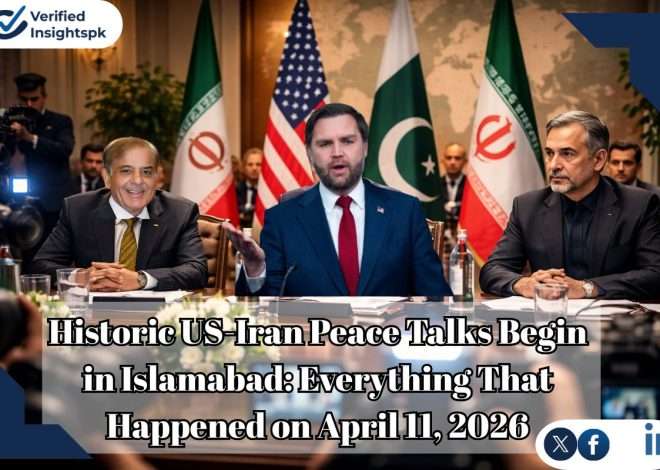
Historic US-Iran Peace Talks Begin in Islamabad: Everything That Happened on April 11, 2026