






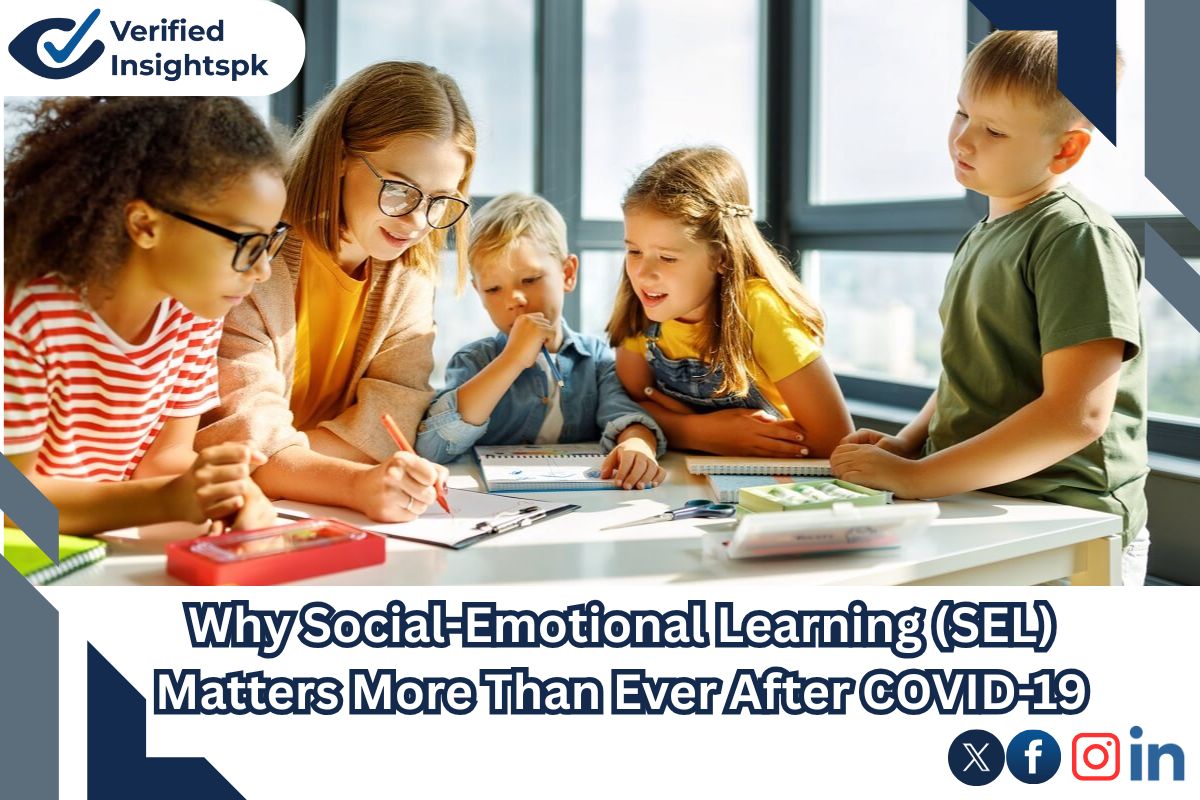
Why Social-Emotional Learning (SEL) Matters More Than Ever After COVID-19
Social Emotional Learning After COVID-19 is no longer just an optional part of education. Following the COVID-19 pandemic, it has become one of the most essential tools to help students grow, maintain emotional stability, and build healthier relationships both at school and at home. The pandemic disrupted normal life, created emotional stress, and affected the mental well-being of millions of children worldwide. As schools reopen and students return to classrooms, SEL is at the centre of rebuilding resilience, empathy, confidence, and academic focus.
In this article, we will explore why SEL matters, how it supports student well-being post-pandemic, and why it is considered a top education trend in 2025. Every section uses high-intent keywords and long-tail search phrases to improve your article’s visibility and ranking.
What is Social Emotional Learning?
The Foundation Children Need Today
Social Emotional Learning teaches children how to understand their emotions, manage stress, build healthy relationships, and make responsible decisions.
After the pandemic, SEL is not just a skill; it is a lifeline for students trying to reconnect with school and society.
Children today face new pressures:
- increased screen time
- reduced social interaction
- learning gaps
- anxiety and uncertainty
SEL provides the emotional balance they need to thrive both inside and outside the classroom.
SEL After COVID-19
A New Priority in Education
COVID-19 changed everything, including the emotional and social development of young people. Students returned to classrooms with:
- fear and stress
- difficulty connecting with peers
- loss of motivation
- academic setbacks
This is why Social Emotional Learning After COVID-19 became a top global priority. Schools now focus on rebuilding confidence, improving communication, and helping students feel safe again.
Social Emotional Learning Importance in 2025 and Beyond
Why is SEL so important now?
Because the emotional health of students directly affects:
- their ability to learn
- their behaviour in class
- their relationships with others
- their long-term success in life
Research shows that SEL improves academic performance, reduces conflict, and increases motivation. In a post-pandemic world, these benefits matter more than ever.
SEL in Schools 2025
A Growing Movement
Schools in 2025 are embracing SEL as a core part of the curriculum.
This includes:
- daily check-ins
- mindfulness activities
- peer support programs
- open conversations about emotions
Teachers are trained to build more supportive, compassionate, and emotionally aware classrooms. SEL is becoming as important as traditional subjects like maths or science.
Benefits of Social Emotional Learning for Every Student
The benefits of SEL stretch far beyond emotional skills. SEL improves:
- self-awareness
- empathy
- confidence
- conflict resolution
- communication
- resilience
Students with strong SEL skills show fewer behavioural problems and higher academic success. They also develop lifelong emotional intelligence that supports them as adults.
Why SEL Matters More Than Ever
SEL matters now because children are still processing pandemic stress. Many students experienced:
- loneliness
- trauma
- anxiety
- loss of routine
- learning disruption
SEL gives them tools to heal, grow, and feel connected again. It also prepares them for future challenges by making them more adaptable and emotionally strong.
Social Emotional Learning and Mental Health
A Powerful Connection
There is a direct link between SEL and mental health.
Children who learn emotional skills are better able to:
- manage stress
- reduce anxiety
- communicate their feelings
- ask for support
Improving mental health through SEL is now a top priority in schools worldwide.
SEL for Student Well-Being Post-Pandemic
Student well-being took a major hit during lockdowns. SEL helps rebuild it through:
- positive relationships
- emotional safety
- healthy coping strategies
- supportive school culture
However, SEL encourages students to express their feelings instead of bottling them up.
SEL Benefits for Students’ Mental Health
Many research says SEL reduces symptoms of anxiety, depression, and emotional overwhelm.
It teaches students to:
- pause and reflect
- understand what they’re feeling
- calm themselves during stress
- think before reacting
These skills create emotionally stable and mentally healthy students.
Teaching Strategies of Social Emotional Learning After COVID-19
Teachers are using new SEL strategies to help students adapt:
- mindfulness breathing
- journaling
- group discussions
- role-play activities
- emotional check-ins
These strategies help bring students back into a positive learning mindset.
How SEL Improves Resilience and Empathy
After COVID-19, resilience became one of the most important qualities. SEL helps students handle setbacks with strength and teaches them to empathize with others who may also be struggling.
Social Emotional Learning for Kids During Pandemic Recovery
SEL supports children through their recovery by helping them rebuild routines, friendships, and confidence. It also helps them relearn social cues and communication skills lost during isolation.
SEL and Student Emotional Recovery After Lockdown
Many students experienced emotional shutdown during lockdowns. SEL helps reopen their emotional world through safe conversations and meaningful connections.
Importance of SEL in Post-COVID Education
Post-COVID education is about more than academics; it is about emotional healing, rebuilding social skills, and preparing students to face an unpredictable world.
SEL Programs and Reduced Anxiety & Depression in Children
Schools with strong SEL programs report lower levels of student anxiety and depression. This proves that emotional learning is just as important as academic learning.
SEL, Empathy & Social Awareness in Schools
SEL encourages students to understand how others feel. This strengthens classrooms and reduces bullying by promoting kindness and understanding.
Social and Emotional Learning in Classrooms 2025
In 2025, SEL is built into daily lessons, group work, and school culture. Classrooms are becoming more supportive, peaceful, and emotionally intelligent.
SEL and Academic Performance Improvement
It improves academic performance by helping students stay focused, motivated, and confident in their abilities.
SEL to Support Student Mental Health and Well-Being
SEL creates a balanced environment where students feel safe, valued, and emotionally supported. This leads to better mental health overall.
SEL Self-Awareness and Conflict Resolution Skills
Self-awareness helps students understand their strengths and weaknesses. Conflict-resolution training helps them manage disagreements peacefully, reducing classroom tensions.
Social Emotional Learning for Teachers and Parents
Parents and teachers also benefit from SEL. When they understand emotional skills, they can better support children at home and school.
SEL and Resilience Building for Teens
Teenagers face huge emotional challenges. SEL builds resilience and helps them navigate social pressures safely.
Social Emotional Learning for Remote Learning Recovery
Remote learning caused learning loss and emotional disconnection. SEL helps students reconnect with school and rebuild confidence.
SEL and Improved School Climate
It will not be wrong to say SEL transforms school environments into safer, kinder, and more supportive places where every student feels welcome.
Trauma-Informed Social Emotional Learning After COVID-19
Many children experienced trauma during the pandemic. Trauma-informed SEL acknowledges this and supports emotional healing gently and respectfully.
Student Mental Health After COVID
Student mental health has become a global concern. SEL is one of the most effective solutions to help children safely manage their emotions.
Youth Well-Being Programs 2025
Well-being programs in 2025 include meditation, peer support circles, positive psychology lessons, and more SEL-focused activities.
Post-Pandemic Education Trends
SEL is one of the biggest education trends today. Schools worldwide are now focusing on emotional safety and mental health.
Emotional Intelligence in Children
SEL builds emotional intelligence, an essential life skill that helps children succeed socially, academically, and professionally.
Social Skills Development in Schools
SEL promotes better communication, teamwork, and cooperation among students.
Teaching Empathy in Schools
Empathy is at the heart of SEL. It helps students understand others, solve conflicts, and build healthy relationships.
Life Skills Education in 2025
SEL is part of modern life-skills education. Students learn communication, decision-making, stress management, and emotional balance.
Mental Health and Education Reform
Schools are transforming their systems to prioritize mental health. SEL is now the core of this reform.
Final Thoughts
Social Emotional Learning After COVID-19 is shaping the future of education. After this pandemic, it has become the foundation of student healing, resilience, and academic success. By focusing on SEL, we are preparing students not just for school, but for life.