





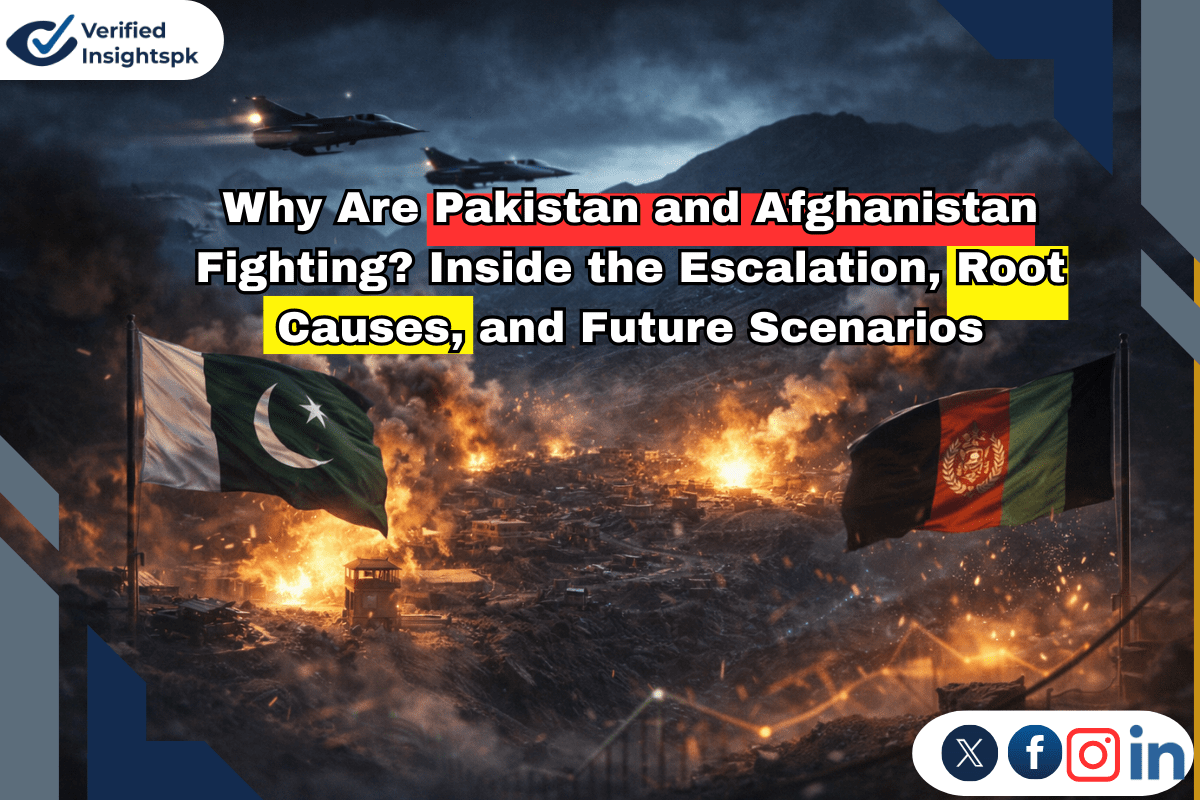
Why Are Pakistan and Afghanistan Fighting? Inside the Escalation, Root Causes, and Future Scenarios
Tensions between Pakistan and Afghanistan have been rising for months. What began as repeated border incidents (Pakistan Afghanistan conflict) has now turned into serious military exchanges. Both sides accuse the other of aggression. Ordinary people are caught in the crossfire. Trade is halted. Civilians are displaced. The conflict is not sudden — it has deep roots.
This article explains the causes of the conflict, how it escalated, and what might happen next. We use verified information and clear facts to help you understand the situation.
Historical Background: Long‑Standing Border Tensions
The Durand Line Dispute
The root of many disagreements between Pakistan and Afghanistan lies in the Durand Line.
- The Durand Line was created in 1893 by British India and Afghanistan.
- Afghanistan has never fully recognised the Durand Line as an official international border.
- The border cuts through Pashtun and Baloch tribal lands, creating ethnic and tribal complexities.
- Many people on both sides still reject the line, seeing it as colonial and artificial.
Because of this, border control and security have always been difficult. The disagreement over the Durand Line feeds mistrust between the two capitals.
Also Read: BREAKING NEWS: Historic Gold & Silver Price Crash: What Just Happened and What You Should Do Now
The Post‑2021 Security Landscape
The situation changed drastically in August 2021.
- After the US and NATO withdrawal, the Taliban regained control of Afghanistan.
- Pakistan hoped the new Afghan government would cooperate on security and prevent militant groups from using Afghan soil.
- Instead, militant movements — especially the Tehreek‑i‑Taliban Pakistan (TTP) — grew stronger in eastern Afghanistan.
These changes shifted the regional security dynamics and increased pressure on Pakistan’s border regions.
The Tehreek‑i‑Taliban Pakistan (TTP) Factor
What Is the TTP?
The Tehreek‑i‑Taliban Pakistan (TTP) is a militant group that has been active in Pakistan’s tribal belt for years.
- Pakistan considers the TTP a terrorist organisation.
- The TTP has carried out suicide bombings, assassinations, and deadly attacks inside Pakistan.
- UN monitoring reports have documented the group’s presence in Afghanistan, especially near the Pakistan border.
For Islamabad, removing TTP safe havens is a top priority.
Pakistan’s Security Claim
Pakistan insists that the TTP operates from Afghan border provinces, including Nangarhar, Paktika, and Kunar.
- Islamabad says it has “conclusive evidence” that TTP leaders are sheltering inside Afghanistan.
- Pakistan argues that these militants are responsible for repeated suicide attacks inside Pakistan.
- Pakistan also alleges that the Afghan Taliban government is protecting or tolerating these groups.
The Afghan Taliban government strongly denies these claims. Kabul insists that its soil is not being used to threaten Pakistan.
Also read: pakistan strickPakistan Strikes Kabul After Taliban Offensive: Escalation at Durand Line Raises Fears of Full-Scale Conflict
Timeline of Escalation
2023–2025: Rising Tensions (Pakistan Afghanistan conflict)
During this period, complaints between Islamabad and Kabul became frequent.
- Pakistan repeatedly accused the Afghan Taliban of allowing the TTP to regroup and launch attacks.
- There were suicide bombings and militant attacks inside Pakistan, which Islamabad attributed to the TTP.
- The Afghan Taliban repeatedly denied harbouring terrorist groups.
Despite diplomatic exchanges, tensions continued to simmer beneath the surface.
October 2025 Clashes
In October 2025, border tensions erupted into serious clashes.
- Pakistani and Afghan Taliban forces exchanged fire along key frontier sectors.
- Dozens of soldiers and civilians were killed or wounded on both sides.
- The situation was highly volatile.
To prevent full‑scale conflict, Qatar and Turkey mediated between the two governments. A fragile ceasefire was agreed, but trust was weak.
February 2026 Escalation
The conflict escalated sharply in February 2026.
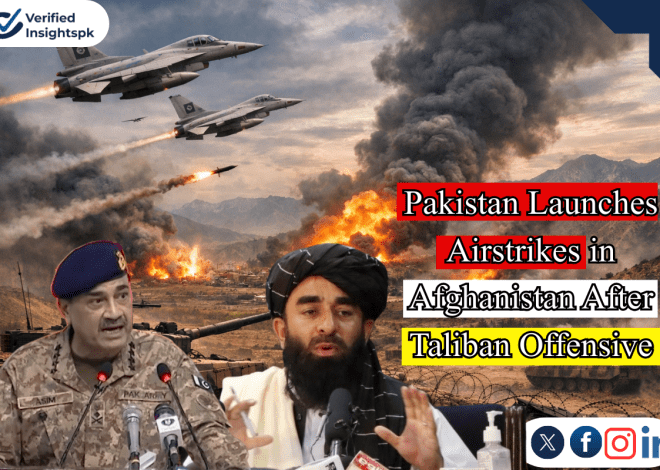
- On 22 February, Pakistan conducted targeted airstrikes inside Afghanistan, claiming to hit militant camps and hideouts linked to the TTP.
- The Afghan Taliban condemned the strikes as a violation of Afghan sovereignty.
- On 26 February, the Taliban publicly announced plans for retaliatory ground operations against Pakistani military positions.
- On 27 February, the situation turned into an open military engagement.
- Pakistan carried out major airstrikes on Kabul, Kandahar, and Paktia provinces.
- Artillery exchanges occurred along multiple border sectors.
- Reports also emerged of drone attacks and anti‑aircraft engagements.
This intense exchange marks one of the most serious escalations in recent years.
Pakistan’s Perspective: Security and Sovereignty
Islamabad’s Justification
Pakistan’s official position is driven by security imperatives.
- Islamabad says its actions are aimed at destroying militant infrastructure and safe havens.
- The government insists that terrorism emanating from Afghan soil threatens Pakistani lives.
- Pakistan’s leaders argue that border security has become a matter of national survival.
According to Islamabad, military action is not an act of aggression but a necessary defence measure.
Official Statements About Pakistan Afghanistan conflict
Senior Pakistani officials have reiterated this stance publicly.
- The Foreign Office spokesperson has stressed that Pakistan’s quarrel is not with the Afghan people but with terrorists who use Afghan territory.
- Defence and interior ministers have warned that Pakistan’s patience is exhausted and that it will use all means to protect its sovereignty.
This rhetoric reinforces Islamabad’s assertion that its actions are defensive and justified under international law.
Also Read: Trump’s State of the Union 2026: Key Announcements, Iran Tensions, Tariffs, and Political Divisions
Taliban Government Response
Official Position
The Afghan Taliban government has responded with its own narrative.
- Taliban officials claim that their operations were retaliatory after Pakistani incursions into Afghan territory.
- They argue that Pakistan’s strikes have violated Afghanistan’s sovereignty.
- The Taliban also accuse Islamabad of causing civilian deaths and destruction.
Taliban spokespeople have made these claims in public statements.
Military Capabilities and Limitations
The Afghan Taliban’s military strength is different from Pakistan’s.
- The Taliban have years of guerrilla warfare experience and can conduct unconventional operations.
- They use light weapons, anti‑tank guns, and improvised defence tactics.
- The group has also used drones in recent clashes to strike Pakistani targets.
However, the Taliban lack a conventional air force and advanced heavy weaponry. They do not have the capacity to launch large‑scale airstrikes deep inside Pakistan.
This imbalance influences how both sides pursue military and political goals.
Also Read: Muslim Bloc Weighs Trump’s Gaza Peace Plan Despite Concerns
On the Ground: Border Clashes and Civilian Impact
Key Flashpoints
The conflict has been concentrated in key border zones:
- Torkham crossing — a vital trade route and entry point.
- Nangarhar, Kandahar, and Paktia provinces — sites of repeated exchanges.
- Kabul outskirts — struck by Pakistani air operations.
These areas are now physical zones of conflict and civilian vulnerability.
Human Cost
The violence has affected ordinary lives.
- Loud explosions and artillery fire have shaken border towns.
- Families have fled homes due to fear and insecurity.
- Long‑term border shutdowns have blocked trade and supplies.
Trade between Pakistan and Afghanistan has been suspended since October 2025, the longest closure in decades. This has had serious economic effects, especially in Afghan markets already facing shortages of medicine and basic goods.
For many Afghans, the relative peace they enjoyed after decades of war has been shattered by renewed violence. Many now fear for their safety and future.
Military Imbalance Between Islamabad and Kabul
Pakistan’s Conventional Strength
Pakistan has a modern and structured military.
- A capable air force with fighter jets and precision strike capabilities.
- Armoured tanks, missiles, and artillery units.
- Nuclear deterrence, which adds strategic weight in defence.
These forces give Pakistan a strong conventional edge.
Taliban’s Capabilities
The Afghan Taliban have different strengths:
- Expertise in guerrilla warfare and unconventional tactics.
- Experience gained from decades of conflict.
- Limited heavy equipment and no air force.
While able to defend and attack on the ground, the Taliban lack the resources for large‑scale conventional engagement.
Also Read:Donald Trump Net Worth 2026, Age, Height, Health, and Latest News
Why Analysts See Full War as Unlikely
Military analysts argue that a full‑scale war between the two sides is unlikely. Reasons include:
- Pakistan’s overwhelming conventional advantage.
- The international community’s pressure for restraint.
- The risk of destabilising the entire region.
Instead, limited engagements, border clashes, and proxy actions are seen as more probable outcomes.
Economic and Regional Fallout After Pakistan Afghanistan conflict
Trade Impacts
The closure of major border crossings has disrupted trade.
- Goods and supplies are stranded.
- Export and import sectors in both countries suffer.
- Local traders face financial hardship.
The longer the border remains closed, the deeper the economic pain.
Effect on Local Economies
Communities on both sides depend on cross‑border business.
- Small businesses are losing customers and income.
- Access to medicines and essentials has become harder.
- Many workers in border towns have lost daily wage opportunities.
This has increased economic stress for already vulnerable populations.
Regional Implications
The conflict affects regional priorities.
- China’s Belt and Road Initiative and transit corridors risk delays.
- Connectivity projects could slow due to security concerns.
- Investment flows may decrease in South and Central Asia.
Continued instability also raises fears of broader geopolitical ripple effects.
International Reactions and Diplomatic Pressure
United Nations
The United Nations has called for immediate de‑escalation.
Officials emphasise the need to protect civilians and adhere to international law. They stress that dialogue is essential to prevent further conflict.
China, Gulf States, and Russia
Several major regional actors have responded:
- China urges restraint and peaceful negotiation.
- Gulf states have offered diplomatic support.
- Russia has called for calm and territorial respect.
These countries have strategic interests in maintaining stability.
Global Security Concerns
Global leaders worry that continued fighting could:
- Trigger wider regional instability.
- Increase refugee flows.
- Create new platforms for extremist groups.
Diplomats stress that Pakistan Afghanistan conflict resolution must involve serious talks and clear agreements.
Possible Scenarios Going Forward
Scenario 1 — Diplomatic De‑Escalation
Pakistan and Afghanistan agree to halt hostilities and return to negotiated talks. Mediators such as Qatar, Turkey, and China help broker a peace process.
This is a hopeful, but fragile, possibility.
Scenario 2 — Limited Continued Strikes
Both sides may continue targeted exchanges without full war. Border incidents and military responses could remain frequent, but controlled.
This scenario seems most likely in the short term.
Scenario 3 — Prolonged Proxy Conflict
The confrontation could deepen into a prolonged conflict through proxy forces, clandestine operations, and militant actions.
This would extend instability and reduce peace prospects.
Scenario 4 — Regional Mediation Breakthrough
Strong pressure from regional powers could push Pakistan and Afghanistan into meaningful negotiations that address border security and militant sanctuaries.
If successful, this could stabilise relations over the long term.
Conflict Rooted in Security but Shaped by Politics
The current Pakistan Afghanistan conflict did not emerge overnight. It is rooted in deep historical tensions, complex tribal dynamics, and serious security concerns.
Pakistan sees the presence of militant groups near its border as an existential threat. Afghanistan rejects claims that its territory is used for hostile acts. These conflicting narratives fuel mistrust and violence.
The escalation of 2026 marks a new chapter in a long‑running dispute. While military action has dominated headlines, the ultimate solution must lie in political negotiation, trust building, and cooperative security measures.
The future remains uncertain. Only serious diplomacy, backed by regional and global engagement, can prevent further escalation and help restore peace.
FAQs
Q1: What is the issue between Afghanistan and Pakistan?
The main issue is the presence of Tehreek‑i‑Taliban Pakistan (TTP) militants in Afghanistan, which Pakistan claims are carrying out attacks inside its territory. Additionally, historical border disputes along the Durand Line and political mistrust between Islamabad and the Taliban government have fueled tensions.
Q2: Why has Pakistan declared war on Afghanistan?
Pakistan has not officially declared a full-scale war, but it has launched airstrikes and military operations inside Afghanistan, claiming they target TTP militant hideouts responsible for attacks in Pakistan, including suicide bombings and assaults on civilians. Pakistan frames this as a security and counterterrorism operation.
Q3: Who is stronger, Pakistan or Afghanistan?
Pakistan has a far stronger conventional military, including advanced aircraft, tanks, missiles, and a nuclear deterrent. Afghanistan, under the Taliban, relies mostly on guerrilla tactics, light weapons, and limited drones. While the Taliban have experience in unconventional warfare, they cannot match Pakistan’s full military capabilities.
Q4: Who are Afghanistan’s best friends?
Afghanistan maintains close ties with Pakistan’s regional rivals and neutral mediators. Key partners include China, which supports development and infrastructure projects, and Qatar and Turkey, which mediate in diplomatic negotiations. Russia and some Gulf states also engage with the Taliban government for strategic and economic purposes.
Disclaimer
This article is based on verified information from multiple credible sources at the time of writing. Developments in Pakistan Afghanistan conflict are dynamic and may change. VerifiedInsightsPK does not independently verify classified military information or intelligence reports.