






US-Iran Talks Fail in Islamabad After 21 Hours as Both Sides Blame Each Other
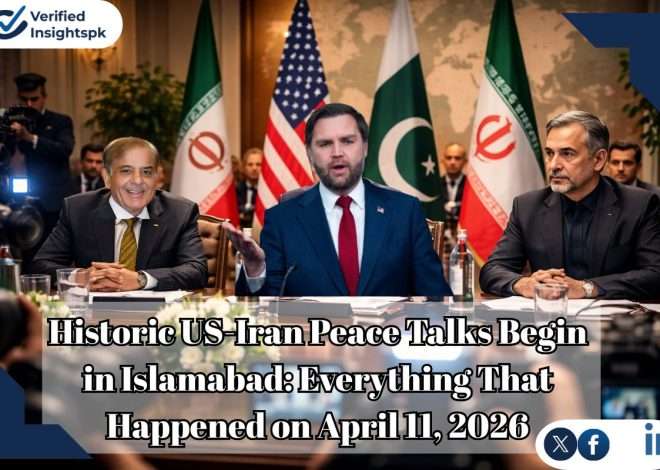
High-level talks between the United States and Iran have ended without any agreement after long negotiations in Islamabad. The meeting lasted for almost 21 hours, but both sides walked away with no deal.
The failure of these talks has raised new concerns about the future of the ceasefire and the ongoing conflict in the Middle East.
What Happened in Islamabad
The talks took place in Islamabad, where Pakistan acted as a mediator between the two countries.
JD Vance led the US delegation. He said that the talks failed because Iran refused to accept key US demands.
According to him, the United States wanted a clear promise from Iran that it would never develop nuclear weapons. He said this was the most important condition.
“Iran did not accept our terms,” Vance told reporters before leaving Pakistan.
Iran’s Response
Iran rejected the US claims and gave a different version of events.
Officials in Tehran said the United States made excessive demands. They said it was not realistic to expect a deal in the first meeting.
Mohammad Baqer Ghalibaf also criticised the US. He said Washington failed to gain the trust of the Iranian delegation during the talks.
Iranian officials added that discussions will continue in some form, even if direct talks are paused.
Main Issues That Blocked the Deal
The biggest disagreement was over Iran’s nuclear programme.
The United States wants Iran to fully give up its nuclear ambitions. It also wants Iran to stop developing any tools that could lead to nuclear weapons.
Iran, however, has its own demands. These include control over the Strait of Hormuz, release of frozen assets, and compensation for war damage.
There were also disagreements about regional conflicts, including the situation in Lebanon.
Why These Talks Were Important
This meeting was very important because it was the first direct high-level contact between the US and Iran in many years.
The last time both countries had such a serious engagement was after the 1979 Islamic Revolution.
The outcome of these talks could have helped stabilize the region and support the ongoing ceasefire.
Impact on the Region
The failure of talks has created uncertainty.
The war has already caused thousands of deaths across the Middle East. It has also damaged infrastructure in several countries.
Another major concern is the Strait of Hormuz. This route carries a large portion of the world’s oil supply. Any disruption can affect global oil prices.
Pakistan’s Role
Pakistan played a key role as a mediator in these talks.
Officials, including Foreign Minister Ishaq Dar, urged both sides to stay committed to the ceasefire and continue dialogue.
Pakistan has also offered to host more talks in the future to help reduce tensions.
What Happens Next
Even though no deal was reached, talks may not be completely over.
Experts believe that backchannel discussions could continue. Both sides may return to negotiations in the coming days or weeks.
However, the gap between their demands remains wide.
Conclusion
The failure of US-Iran talks in Islamabad shows how complex the situation is.
Both sides are standing firm on their positions. Trust is still missing. And key issues remain unresolved.
For now, the world will be watching closely to see if diplomacy can continue or if tensions will rise again.
More Related Topics on Verified Insights Pakistan:
Historic US-Iran Peace Talks Begin in Islamabad: Everything That Happened on April 11, 2026
Solar Panel Price in 2026: Complete Guide for Home Use
How the Petrol Price Increase in Pakistan Is Affecting Common People in 2026
Why Are Pakistan and Afghanistan Fighting? Inside the Escalation, Root Causes, and Future Scenarios
Petrol Price Drop in Pakistan: PM Shehbaz Orders Immediate Relief as Global Oil Prices Fall