






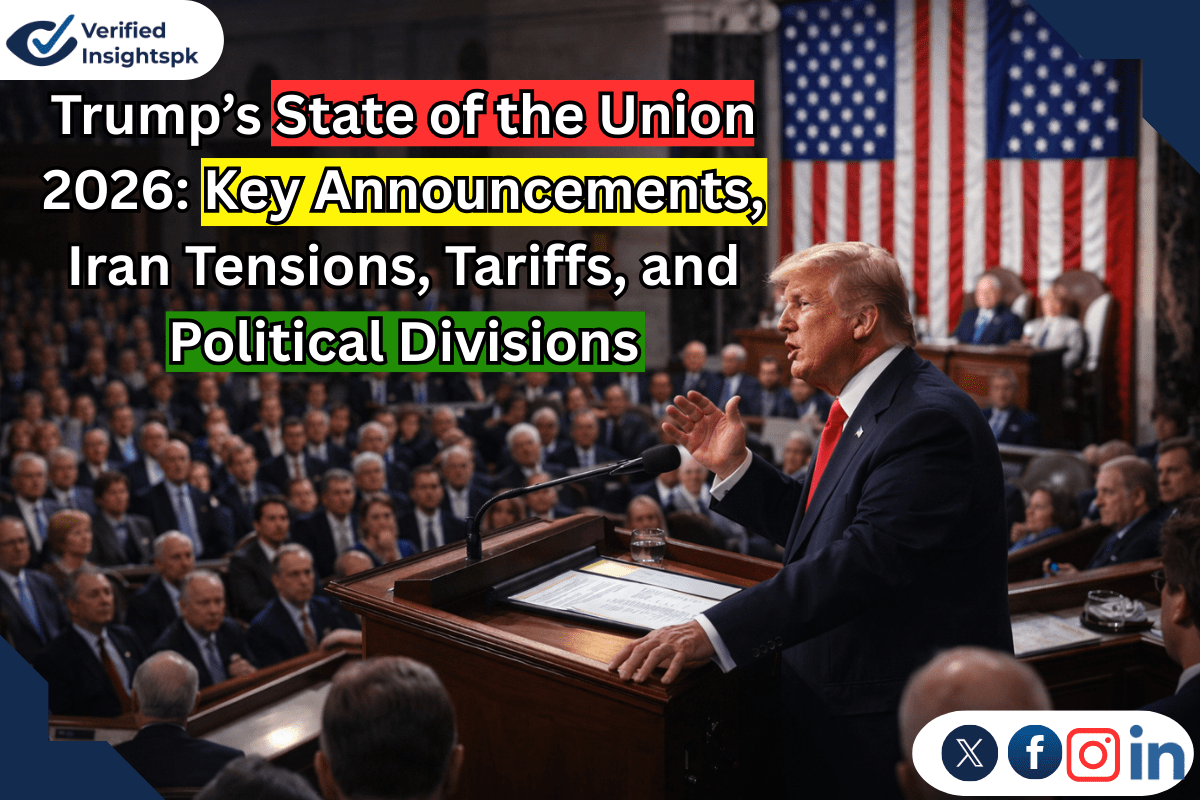
Trump’s State of the Union 2026: Key Announcements, Iran Tensions, Tariffs, and Political Divisions
US President Donald Trump delivered his first State of the Union address of his second term on February 24, 2026, presenting his administration’s achievements, future plans, and foreign policy priorities. The speech, lasting more than 100 minutes, became the longest State of the Union address in modern US history. Trump used the occasion to highlight economic policies, immigration enforcement, national security, and rising geopolitical tensions, particularly with Iran.
The address reflected both confidence from the administration and deep political divisions within the United States, as several opposition lawmakers boycotted the speech and criticism emerged from Democratic leaders.
Focus on Iran: Diplomacy Preferred but Military Tensions Remain
One of the most significant parts of Trump’s speech focused on Iran and ongoing tensions in the Middle East. Trump stated that his preference remains a diplomatic solution but warned that Iran continues to develop missile capabilities that could threaten US interests and allies.
He repeated his claim that previous US military strikes had severely damaged Iran’s nuclear infrastructure. However, he emphasized that negotiations remain possible if Iran agrees to permanently halt any nuclear weapons ambitions.
The issue has raised global concerns, as increased US military presence in the region has fueled speculation about possible future conflict. At the same time, diplomatic efforts continue behind the scenes, with international observers urging restraint and peaceful negotiations.
Tariffs and Economic Policy After Supreme Court Setback
Trump also addressed recent economic challenges, particularly after a US Supreme Court ruling that invalidated parts of his tariff program. Despite the ruling, Trump announced plans to pursue tariffs through alternative legal mechanisms.
He defended tariffs as necessary to protect American industries, reduce dependence on foreign manufacturing, and strengthen domestic production. Critics, however, argue that tariffs have increased costs for businesses and consumers while creating uncertainty in global trade.
Economic policy remains a key issue ahead of upcoming elections, with both parties presenting different approaches to inflation, trade, and economic growth.
Immigration and National Security Measures
Immigration enforcement was another major theme of the speech. Trump highlighted increased deportations, expanded border enforcement, and stricter immigration policies as part of his administration’s national security strategy.
He argued that these policies are essential for protecting American citizens and maintaining law and order. However, critics claim that aggressive enforcement measures have caused fear in immigrant communities and raised concerns about civil liberties.
Immigration continues to be one of the most politically sensitive and debated topics in the United States.
Artificial Intelligence and Energy Policy
Trump also addressed the rapid expansion of artificial intelligence infrastructure. He announced that major technology companies building AI data centers would be expected to generate their own electricity rather than relying on public power grids.
This policy is aimed at preventing increased energy costs for citizens and reducing pressure on national energy infrastructure. The rapid growth of AI technology has created both economic opportunities and concerns about energy consumption and environmental impact.
Political Divisions and Opposition Response
The speech highlighted deep political divisions in Washington. Several Democratic lawmakers boycotted the address, while others walked out during the speech. Opposition leaders criticized Trump’s economic and immigration policies, arguing that they have increased costs for families and created social tensions.
Despite the criticism, Trump presented his administration as strong and successful, pointing to crime reduction in major cities, economic initiatives, and national security actions.
Global Impact and Future Outlook
Trump’s speech comes at a critical time for global politics. US relations with Iran, ongoing conflicts in the Middle East, trade tensions, and technological competition with global powers such as China will shape international stability in the coming years.
The president emphasized that the United States is entering what he described as a new era of strength, especially as the country prepares to mark its 250th anniversary in 2026.
However, political polarization, economic uncertainty, and international tensions suggest that the coming months will remain challenging both domestically and globally.
Conclusion
President Donald Trump’s 2026 State of the Union address highlighted his administration’s priorities, including national security, economic protection, immigration enforcement, and technological expansion. While Trump expressed confidence in America’s future and emphasized diplomacy with Iran, the speech also revealed ongoing domestic political divisions and international uncertainty.
The direction of US foreign policy, especially regarding Iran and global trade, will play a critical role in shaping international relations and economic stability. As diplomatic efforts continue and political debates intensify, the world will closely watch how US leadership navigates these complex challenges.
Trump’s State of the Union 2026: Key Announcements, Iran Tensions, Tariffs, and Political Divisions
US President Donald Trump delivered his first State of the Union address of his second term on February 24, 2026, presenting his administration’s achievements, future plans, and foreign policy priorities. The speech, lasting more than 100 minutes, became the longest State of the Union address in modern US history. Trump used the occasion to highlight economic policies, immigration enforcement, national security, and rising geopolitical tensions, particularly with Iran.
The address reflected both confidence from the administration and deep political divisions within the United States, as several opposition lawmakers boycotted the speech and criticism emerged from Democratic leaders.
Focus on Iran: Diplomacy Preferred but Military Tensions Remain
One of the most significant parts of Trump’s speech focused on Iran and ongoing tensions in the Middle East. Trump stated that his preference remains a diplomatic solution but warned that Iran continues to develop missile capabilities that could threaten US interests and allies.
He repeated his claim that previous US military strikes had severely damaged Iran’s nuclear infrastructure. However, he emphasized that negotiations remain possible if Iran agrees to permanently halt any nuclear weapons ambitions.
The issue has raised global concerns, as increased US military presence in the region has fueled speculation about possible future conflict. At the same time, diplomatic efforts continue behind the scenes, with international observers urging restraint and peaceful negotiations.
Tariffs and Economic Policy After Supreme Court Setback
Trump also addressed recent economic challenges, particularly after a US Supreme Court ruling that invalidated parts of his tariff program. Despite the ruling, Trump announced plans to pursue tariffs through alternative legal mechanisms.
He defended tariffs as necessary to protect American industries, reduce dependence on foreign manufacturing, and strengthen domestic production. Critics, however, argue that tariffs have increased costs for businesses and consumers while creating uncertainty in global trade.
Economic policy remains a key issue ahead of upcoming elections, with both parties presenting different approaches to inflation, trade, and economic growth.
Immigration and National Security Measures
Immigration enforcement was another major theme of the speech. Trump highlighted increased deportations, expanded border enforcement, and stricter immigration policies as part of his administration’s national security strategy.
He argued that these policies are essential for protecting American citizens and maintaining law and order. However, critics claim that aggressive enforcement measures have caused fear in immigrant communities and raised concerns about civil liberties.
Immigration continues to be one of the most politically sensitive and debated topics in the United States.
Artificial Intelligence and Energy Policy
Trump also addressed the rapid expansion of artificial intelligence infrastructure. He announced that major technology companies building AI data centers would be expected to generate their own electricity rather than relying on public power grids.
This policy is aimed at preventing increased energy costs for citizens and reducing pressure on national energy infrastructure. The rapid growth of AI technology has created both economic opportunities and concerns about energy consumption and environmental impact.
Political Divisions and Opposition Response
The speech highlighted deep political divisions in Washington. Several Democratic lawmakers boycotted the address, while others walked out during the speech. Opposition leaders criticized Trump’s economic and immigration policies, arguing that they have increased costs for families and created social tensions.
Despite the criticism, Trump presented his administration as strong and successful, pointing to crime reduction in major cities, economic initiatives, and national security actions.
Global Impact and Future Outlook
Trump State of the Union 2026 speech comes at a critical time for global politics. US relations with Iran, ongoing conflicts in the Middle East, trade tensions, and technological competition with global powers such as China will shape international stability in the coming years.
The president emphasized that the United States is entering what he described as a new era of strength, especially as the country prepares to mark its 250th anniversary in 2026.
However, political polarization, economic uncertainty, and international tensions suggest that the coming months will remain challenging both domestically and globally.
Conclusion
President Donald Trump’s 2026 State of the Union address highlighted his administration’s priorities, including national security, economic protection, immigration enforcement, and technological expansion. While Trump expressed confidence in America’s future and emphasized diplomacy with Iran, the speech also revealed ongoing domestic political divisions and international uncertainty.
The direction of US foreign policy, especially regarding Iran and global trade, will play a critical role in shaping international relations and economic stability. As diplomatic efforts continue and political debates intensify, the world will closely watch how US leadership navigates these complex challenges.
FAQ
What did Trump say about Iran in the 2026 State of the Union?
Trump said he prefers a diplomatic solution with Iran but warned about missile threats and emphasized US military strength in the region.
Why are Trump’s tariffs controversial?
The US Supreme Court blocked parts of Trump’s tariff program, but he plans to impose new tariffs using alternative legal authorities.
How long was Trump State of the Union 2026 speech?
The speech lasted more than 100 minutes, making it the longest State of the Union address in modern US history.
What did Trump announce about artificial intelligence?
Trump said technology companies building AI data centers must provide their own electricity to avoid increasing public energy costs.
Why did some lawmakers boycott the speech?
Some opposition lawmakers protested Trump’s immigration policies, economic decisions, and national security actions.
Disclaimer
This article is based on publicly available reports, official statements, and verified news coverage at the time of publication. Political statements, claims, and policy positions mentioned reflect the views of the individuals or officials who made them. This content is intended for informational and journalistic purposes only and does not represent political endorsement or opinion. Readers are encouraged to follow official government announcements and multiple trusted news sources for the latest developments.