





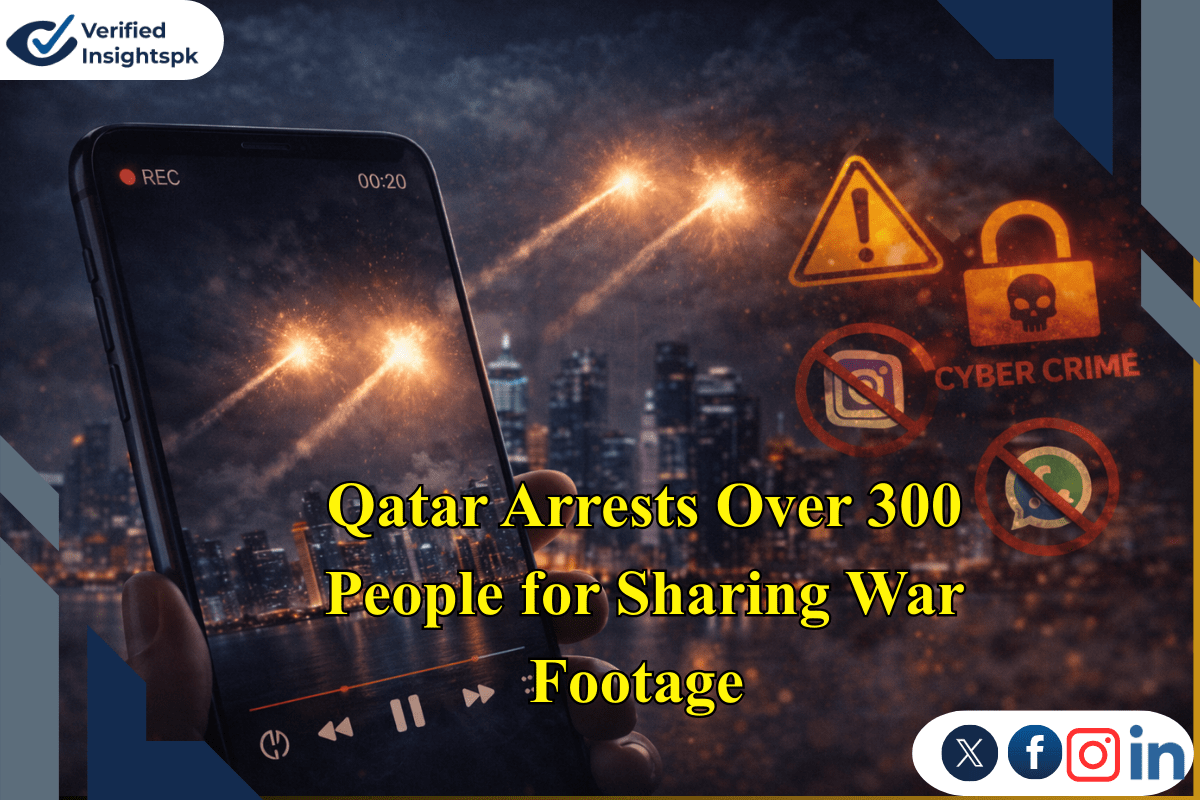
Qatar Arrests Over 300 People for Sharing War Footage as Gulf Nations Tighten Social Media Restrictions
As tensions rise across the Middle East following missile and drone attacks linked to Iran, several Gulf countries are taking strict action against people sharing videos and information about the conflict online. In one of the most significant crackdowns so far, authorities in Qatar have arrested more than **300 individuals accused of circulating video footage and “misleading information” related to the ongoing attacks. The move reflects a broader regional effort to control the spread of sensitive security information on social media during a time of heightened military activity. Let’s get to know more about “Qatar arrests over war videos.”
Qatar Arrests Hundreds Over Social Media Posts
According to officials from the Qatari Interior Ministry, 313 people of various nationalities were detained for filming and sharing videos of missile strikes, drones, and other security incidents. Authorities said the individuals also spread rumors or unverified information that could influence public opinion and cause panic.
The arrests were carried out by the Department for Combating Economic and Cyber Crimes, part of the ministry’s General Directorate of Criminal Investigations. Officials emphasized that recording or publishing footage of security operations, defense systems, or military responses can expose sensitive information that could be exploited by hostile actors.
This crackdown comes after several days of missile and drone attacks linked to Iran, targeting airports, military installations, energy infrastructure, and residential areas across parts of the Gulf region.
Also Read: OpenAI Faces Backlash After Pentagon AI Deal as ChatGPT Uninstalls Surge
Gulf Countries Increase Digital Surveillance
Qatar is not the only country taking action. Governments across the Gulf have introduced stricter digital monitoring and warnings for residents and travelers regarding social media activity during the conflict.
In Bahrain, authorities recently arrested four people accused of filming and sharing footage of Iranian attacks while also spreading false information online.
Similarly, officials in Kuwait detained three individuals after a video surfaced showing them mocking the country’s security situation during the ongoing tensions.
Meanwhile, residents in the United Arab Emirates have received official text messages warning them against sharing images or videos related to security incidents. Authorities warned that reposting unverified information or recording sensitive locations could lead to legal action.
Also Read: From Pop Icon to Preacher: Junaid Jamshed Biography, Songs, Life and Legacy
UAE Warns Against Filming Missile Debris and Incident Sites
The UAE Attorney-General’s office has issued strong warnings against recording or distributing footage of missile interceptions, damaged infrastructure, or defense operations. Officials say even seemingly harmless smartphone videos can reveal important details about security responses and infrastructure.
Authorities have advised residents and travelers to avoid:
- Filming airports or military installations
- Recording missile debris or intercepted projectiles
- Livestreaming emergency events or security responses
- Sharing videos from unknown sources
Violations may result in fines, detention, or prosecution under cybercrime laws.
Saudi Arabia and Other Nations Enforce Strict Online Rules
In Saudi Arabia, authorities have also warned that posting or sharing rumors about security developments could lead to severe penalties. Updated cybercrime and media regulations allow officials to investigate individuals who spread misinformation or publish footage showing military activity or sensitive infrastructure.
Government officials say even actions like liking, reposting, or commenting on certain content could trigger investigations if it is deemed harmful to public order or national security.
Donald Trump Net Worth 2026, Age, Height, Health, and Latest News
Iran Uses Internet Controls to Limit Video Sharing
Authorities in Iran have implemented some of the most aggressive digital restrictions in the region. The government has previously imposed internet shutdowns, signal disruptions, and platform restrictions to prevent videos related to protests, military operations, or security incidents from spreading online.
Individuals who upload sensitive footage or use VPNs and satellite internet to share videos abroad can face prosecution under Iranian cybercrime laws.
Also Read: US-Israel War With Iran Escalates: Strait of Hormuz Threat, Tehran Strikes, and Global Shockwaves
The Information Battlefield in Modern Warfare
Experts say the growing restrictions “Qatar arrests over war videos” reflect a major shift in modern conflicts. In today’s digital age, a single smartphone video can reveal military positions, defense responses, or damage assessments within minutes.
Governments argue that controlling such information is critical for national security. However, critics warn that broad restrictions on social media could also limit freedom of expression and public access to information during times of crisis.
Despite the warnings, videos showing missile launches, explosions, and the aftermath of attacks continue to circulate widely across social media platforms and private messaging groups.
As tensions in the Middle East remain high, the battle over information and digital narratives is increasingly becoming as important as events unfolding on the ground.
Why “Skyfall” Is Trending During the War: The Meaning Behind the Viral Social Media Trend