





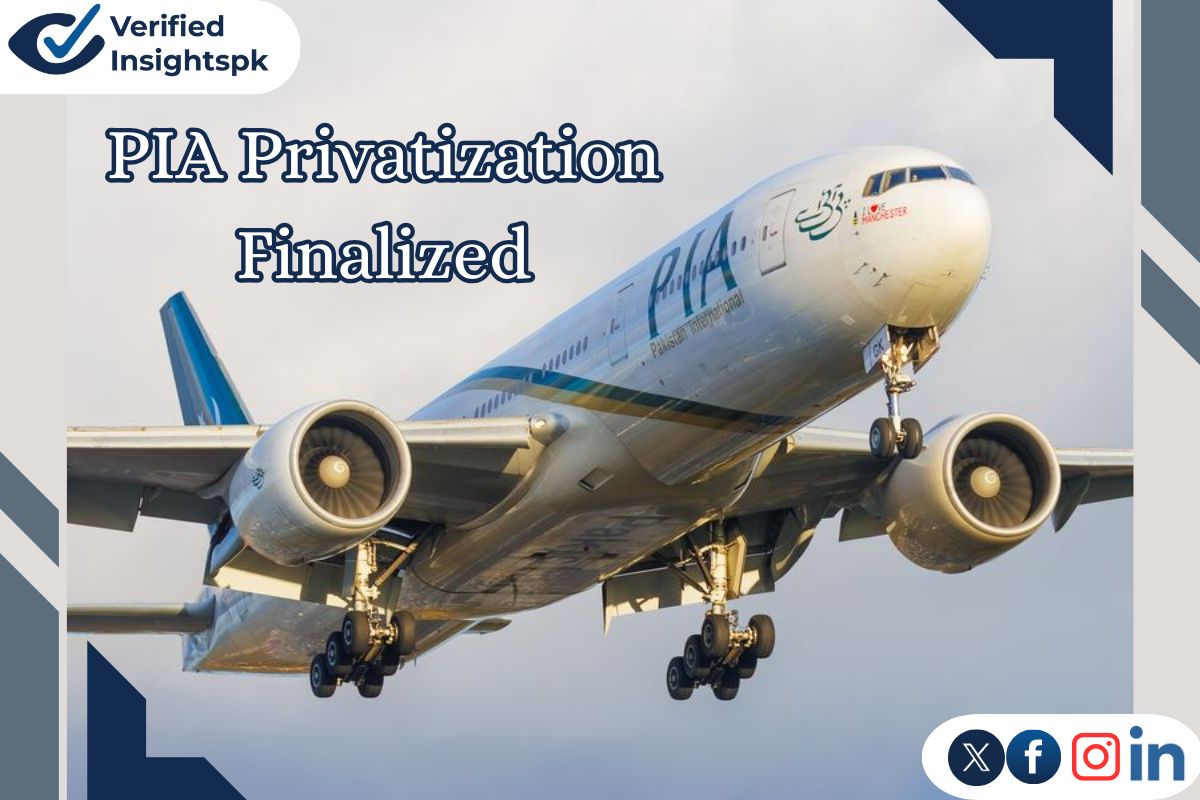
PIA Privatization Finalized |Arif Habib Consortium Wins 75% Stake with Rs135 Billion Bid|
Pakistan International Airlines (PIA) has officially entered a new phase as the government completed one of the largest privatisation deals in Pakistan’s history. After a transparent and televised bidding process, the Arif Habib Corporation-led consortium emerged as the winning bidder, securing a 75% majority stake in the national flag carrier for Rs135 billion. The move is aimed at reviving PIA, attracting investment, and restoring its past glory.
Transparent Bidding Process for PIA Privatisation
The bidding ceremony was held in Islamabad and broadcast live on state television to ensure full transparency. Representatives from pre-qualified groups submitted sealed bids in a public setting.
The reference price was set at Rs100 billion, approved by the Privatisation Commission Board and the Cabinet Committee on Privatisation after receiving bids.
This marked Pakistan’s second attempt at privatising PIA, following last year’s failed effort when a single bid fell far below expectations.
Arif Habib Consortium Secures Highest Bid
There were three bids for the PIA’s privatization.
- Arif Habib Consortium: Rs135 billion (winning bid)
- Lucky Cement–led Consortium: Rs134 billion
- Airblue: Rs26.5 billion (exited early)
After multiple competitive rounds, Arif Habib raised its offer from Rs115 billion to Rs135 billion, narrowly beating Lucky Cement.
The winning consortium includes:
- Fatima Fertiliser Company Limited
- City Schools (private education network)
- Lake City Holdings Limited
What Will be the Use of Rs135
According to government officials:
- 92.5% of the proceeds will be invested directly into PIA
- 7.5% (Rs 10.12 billion) will go to the federal government
The government will retain a 25% stake, which the winning bidder may purchase later or allow the state to keep.
Government’s Objective (Revival, Not Just Sale)
Adviser to the Prime Minister on Privatisation, Muhammad Ali, stressed that the government’s goal was not merely selling the airline, but reviving it through fresh investment.
Key focus areas include:
- Purchasing new aircraft
- Expanding the fleet from 18 to 30–40 planes
- Repairing engines and reducing liabilities
- Ensuring timely salary payments to employees
“If we want PIA to grow, investment is the only way forward,” he said.
Payment Structure and Investor Flexibility
The payment terms for the winning bidder include:
- Two-thirds of the amount is payable within 90 days
- Remaining one-third payable within 12 months
The framework also allows:
- Bidders to acquire 75% to 100% ownership
- Inclusion of up to two additional parties after the bidding process
Unsuccessful Bidders Barred from Management
A unique condition of this privatisation is that unsuccessful bidders cannot join PIA’s future management. Only groups that were not part of the auction may later partner with the winning consortium.
This means:
- Lucky Cement and Airblue cannot join PIA’s management
- Fauji Fertiliser Company, which withdrew earlier, may still join later
Prime Minister Calls It a Historic Transaction
Prime Minister Shehbaz Sharif praised the privatisation process, calling it the largest and most transparent transaction in Pakistan’s history.
He congratulated government officials and the Privatisation Commission, stating that privatising loss-making state entities was a key promise of his administration.
Why PIA Is More Attractive Now
PIA’s prospects have improved significantly due to:
- Government assumption of legacy debt
- First pre-tax profit in over 20 years
- Lifting of UK and EU flight bans
- Access to 78 destinations and 170 global landing slots
These improvements played a major role in attracting strong bids.
Part of IMF-Backed Economic Reforms
The PIA sale is part of a broader IMF-supported reform agenda, which includes the privatisation of:
- State-owned banks
- Power distribution companies
- Other loss-making public enterprises
The aim is to reduce fiscal pressure and restore investor confidence.
Conclusion
The successful privatisation of PIA marks a turning point for Pakistan’s aviation sector. With a strong local consortium at the helm, fresh investment, and professional management, PIA now has a real opportunity to recover, expand, and compete globally.
The government’s emphasis on transparency and reform has also sent a positive signal to both local and foreign investors, strengthening confidence in Pakistan’s economic future.