





Pakistan Raises Serious Terrorism Concerns at Tehran Regional Meeting on Afghanistan
Pakistan Terrorism Concerns: Calls for Regional Stability and Peaceful Afghanistan
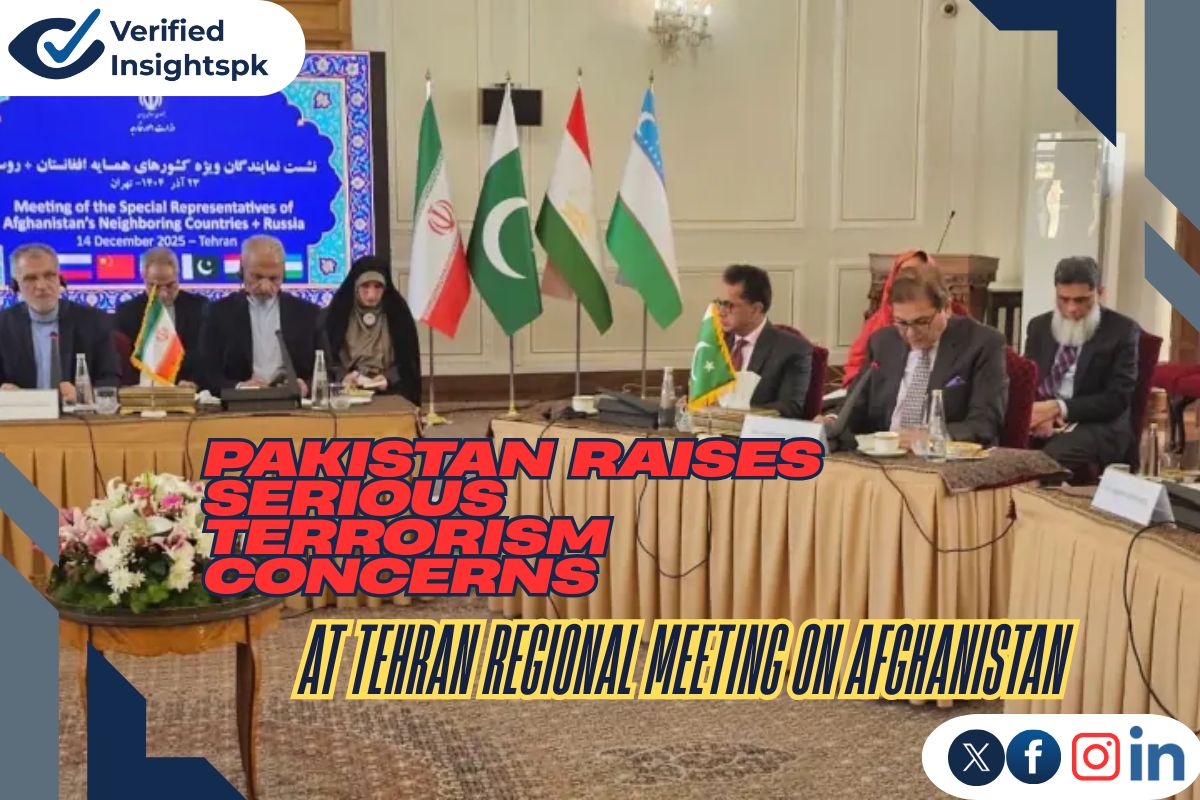
Pakistan has raised serious concerns about terrorism during a high-level regional meeting held in Tehran, emphasizing that instability in Afghanistan continues to pose serious security threats to Pakistan and the wider region. The meeting brought together neighbouring countries of Afghanistan, along with Russian special representatives to discuss regional peace, security, and cooperation.
According to official sources, Pakistan strongly highlighted the growing challenge of terrorism and stressed that lasting peace in Afghanistan is essential for the stability and development of the entire region. The Pakistani delegation clearly stated that insecurity in Afghanistan directly affects neighbouring countries, especially Pakistan.
Pakistani Delegation Led by Special Representative Muhammad Sadiq
The Pakistani delegation at the Tehran regional meeting was led by Muhammad Sadiq, Pakistan’s Special Representative for Afghanistan. He was accompanied by Pakistan’s Ambassador to Iran, Mudassir Tipu and Ambassador to Afghanistan, Ubaid Ur Rehman Nizamani.
The meeting was formally inaugurated by Iran’s Foreign Minister Abbas Araghchi, who delivered the keynote address. Representatives from regional countries used the platform to exchange views on Afghanistan’s political situation, security challenges, and the need for coordinated regional efforts.
During the session, the Pakistani delegation highlighted that Pakistan remains committed to promoting peace, economic development, and long-term security across the region.
Terrorism Poses Serious Threats to Pakistan
While addressing the forum (Pakistan terrorism concerns), Pakistan underscored that terrorism remains a major concern and continues to threaten national and regional security. The delegation warned that extremist elements operating from Afghan territory have created serious challenges for Pakistan.
Pakistan emphasized that without effective action against terrorism, peace efforts in the region will remain fragile. Therefore, Islamabad called on regional stakeholders to adopt a collective and responsible approach to counter terrorism and prevent militant groups from destabilizing neighbouring states.
Furthermore, Pakistan stressed that cooperation, dialogue, and mutual trust are the only sustainable ways forward.
Iran Highlights Impact of Pakistan-Afghanistan Tensions
Meanwhile, Iran’s Foreign Ministry spokesperson Ismail Baqai, while speaking at a press conference, stated that rising tensions between Pakistan and Afghanistan could have serious consequences for Iran as well. He noted that all three countries share borders, making regional stability a shared responsibility.
He added that insecurity in one country can easily spill over into neighbouring states, which is why peaceful relations and cooperation are essential.
Ismail Baqai also mentioned that Iran respects the Taliban administration’s decision not to attend the Tehran conference. However, he emphasized that such regional forums provide valuable opportunities for dialogue, understanding, and problem-solving among neighbouring countries.
Importance of Regional Dialogue on Afghanistan
Iranian officials highlighted that regional conferences like the Tehran meeting help build communication channels and encourage peaceful engagement. These platforms, they said, can assist countries in addressing misunderstandings and reducing tensions through diplomatic means rather than conflict.
According to Iranian representatives, consistent dialogue can also help Afghanistan’s neighbours work together on issues such as border security, refugee management, and economic cooperation.
High-Level Pakistan-Iran Talks on the Sidelines
On the sidelines of the conference, Muhammad Sadiq held a separate meeting with Iranian Foreign Minister Abbas Araghchi. During the discussion, both sides exchanged views on bilateral relations and regional developments.
Abbas Araghchi expressed Iran’s strong desire to further strengthen diplomatic, political, and economic ties with Pakistan. He also appreciated Pakistan’s role in promoting peace and stability in the region.
In response, Muhammad Sadiq thanked Iran for hosting the important regional meeting and expressed hope that the conference would contribute meaningfully to peace, stability, and development across the region.
Pakistan Reaffirms Commitment to Regional Peace
Pakistan once again reaffirmed its commitment to supporting peace in Afghanistan, stating that a stable Afghanistan benefits not only Pakistan but all neighbouring countries. Islamabad emphasized that conflict and instability serve not only to worsen humanitarian and security challenges.
The Pakistani delegation urged regional powers to focus on long-term solutions that include development, economic cooperation, and counter-terrorism measures.
Conclusion
The Tehran regional meeting highlighted the urgent need for collective regional action to address terrorism and instability linked to Afghanistan. Pakistan’s strong stance at the conference reinforced its position that peace in Afghanistan is essential for regional security and prosperity.
As regional tensions continue to evolve, such diplomatic engagements remain crucial. Through dialogue, cooperation, and shared responsibility, neighbouring countries can work toward a safer, more stable future for the region.