







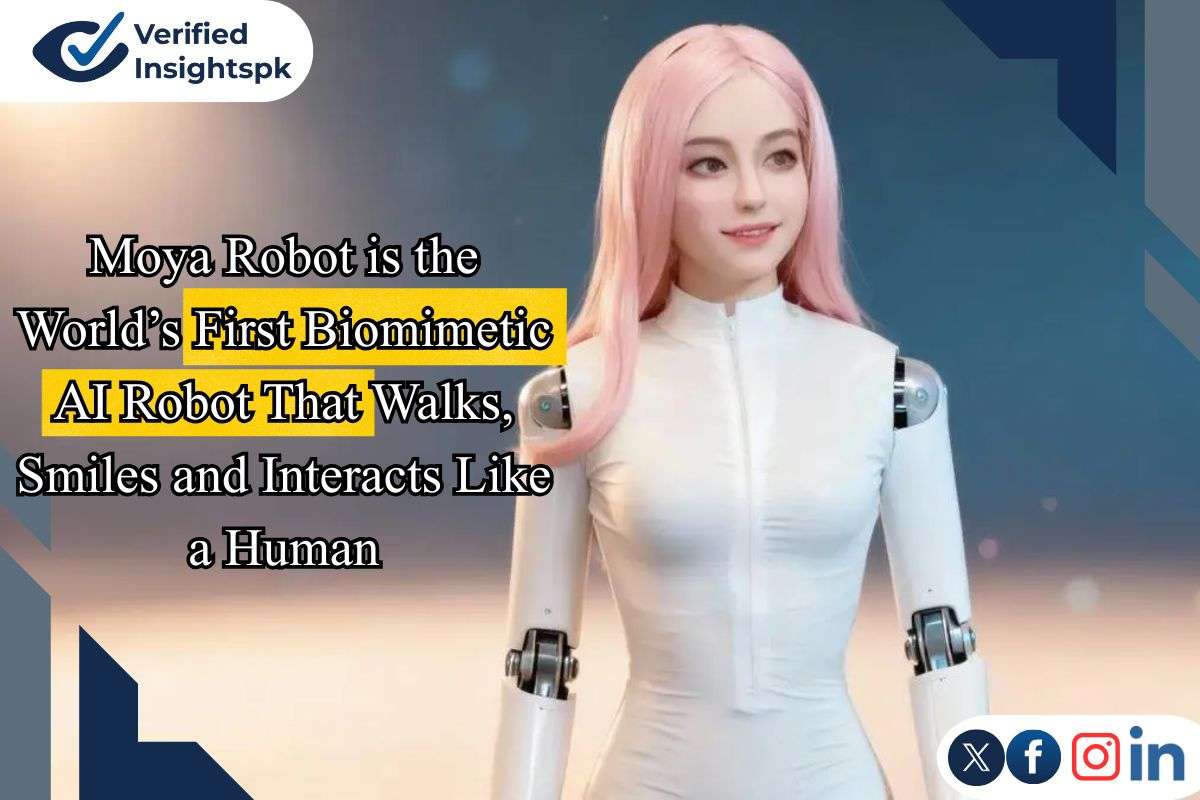
Moya Robot is the World’s First Biomimetic AI Robot That Walks, Smiles and Interacts Like a Human
In the fast‑moving world of artificial intelligence and robotics, a breakthrough has captured global attention. A Chinese robotics company named DroidUp recently unveiled what it calls the world’s first biomimetic AI robot, named Moya. This isn’t just another industrial robot or clunky machine in a factory, Moya is designed with one goal in mind: to walk, interact and behave like a real person in the physical world.
In this deep‑dive article, we’ll explore everything about Moya, from her design and capabilities to how she’s different from traditional robots, the technology behind her, real‑world applications, public reaction, and what this means for the future of robotics worldwide.
What Is Moya? Is it a New Era of Robotics
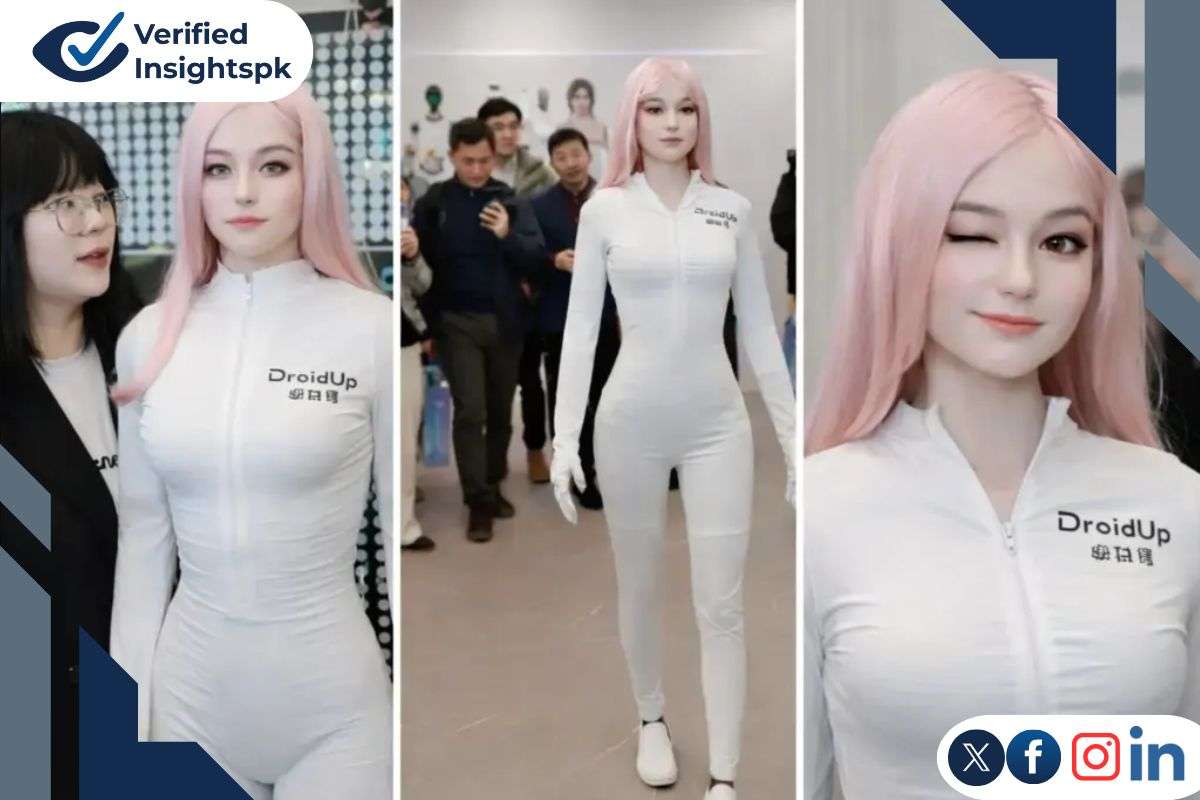
Moya is described by DroidUp as the first fully biomimetic embodied AI robot ever developed. This means that instead of robots being limited to performing programmed tasks in controlled environments, Moya’s intelligence is integrated directly into her physical form. She can perceive, reason and act in the real world, not just in a computer simulation.
Put simply, Moya goes beyond traditional machines. She combines advanced artificial intelligence with a lifelike body, enabling her to respond to people and environments in ways that feel natural and human‑like.
What Makes Moya Unique?
Unlike industrial robots designed for factories or labs, Moya’s development focuses on human‑oriented interactions rather than strength or speed. Here are the key features that set her apart:
1. Human‑Like Walking and Posture
One of the most striking aspects of Moya is her ability to walk with a 92% human‑like accuracy in posture and gait. This isn’t simply repetitive or mechanical movement; her strides and balance are designed to resemble how humans naturally walk.
This level of biomimetic motion is rare even among advanced humanoid robots, and it represents a significant step toward machines moving fluidly in real‑world environments.
2. Lifelike Facial Expressions and Motion
Moya doesn’t just walk like a human; she smiles, nods, winks and maintains eye contact. These subtle, human‑like facial cues are often referred to as micro‑expressions, and they are crucial for emotional communication between people.
Combined with AI‑powered perception, Moya can adjust these expressions based on interactions with people around her, making conversations feel more natural.
3. Warm “Human‑Like” Body Temperature
One detail that has captured public curiosity is that Moya maintains a body temperature between 32°C and 36°C (89.6°F – 96.8°F). This feature isn’t just for show; it is meant to mimic the warmth of human skin, which could make interactions feel more comfortable and relatable.
This subtle design choice shows how far robotics researchers are willing to go to bridge the gap between machines and human experience.
4. Modular and Customizable Design
Moya’s structure is based on an upgraded “Walker 3” chassis, a framework that allows her external appearance to be adjusted without altering the internal mechanics.
This means that in the future, different versions of Moya could be made with varying appearances and body forms depending on their intended roles, from healthcare assistants to educational helpers.
The Technology Behind Moya: Embodied AI
At the heart of Moya is a concept known as embodied artificial intelligence. Unlike standard AI systems that exist only in software, embodied AI integrates intelligence directly into a robot’s physical body.
Here’s why this is important:
- Perception in the physical world: Moya can see and interpret her surroundings using integrated sensors.
- Real‑time responses: She doesn’t just process information; she reacts dynamically, like a human might during real conversations.
- Adaptive behaviour: Moya’s AI allows her to make decisions based on what she senses and learns.
This combination of perception, reasoning and action allows Moya to operate outside controlled environments, and that’s a major leap in robot design.
Design Details (Humanoid Body That Mimics Life)
Moya stands at about 1.65 meters tall (roughly 5.5 feet) and weighs close to 32 kilograms (about 70 pounds), putting her in the size range of an average adult human.
Engineers use lightweight lattice materials in her skeleton and movement system to mimic muscle and tissue, which helps create smoother movement and better heat control. These design elements contribute to her ability to walk naturally and interact with people in a way that feels more organic.
A camera placed behind her eye region enhances her ability to make eye contact and track social cues, which is essential for real‑time interaction and communication.
Mixed Reactions From the Public
As videos and reports of Moya spread on social media and news platforms, audiences showed mixed reactions, with many fascinated by her human-like features and potential uses. Others have pointed to an “uncanny valley” effect, the discomfort people feel when machines look almost, but not quite, human.
This diversity of opinion shows just how powerful and unpredictable public perception can be when it comes to lifelike robotics.
How Moya Is Different From Other Humanoid Robots
Humanoid robots aren’t new; companies like Boston Dynamics, Honda and Tesla have developed advanced machines over the years. However, most robotics companies design these robots mainly for industrial work, research, or experimental labs.
Here’s how Moya stands apart:
- Human‑oriented interaction: Other robots excel at speed, strength or precise tasks. Moya prioritizes social engagement.
- Facial expressions and eye contact: This goes beyond programmed gestures — it’s real‑time AI interaction.
- Temperature and sensory mimicry: Few robots include warmth as part of their design.
This focus on replicating human behaviour and social presence places Moya at the frontier of humanoid robotics.
Possible Real‑World Uses for Moya
DroidUp isn’t marketing Moya as a household gadget or factory worker. Instead, the company sees her playing roles in environments where human‑like interaction matters most.
Healthcare Assistance
Moya could serve as a companion or support robot for elderly patients, offering monitoring, reminders for medication, or simply friendly company in assisted living spaces. Her ability to make eye contact and converse naturally could reduce feelings of isolation.
Education and Child Interaction
In schools or learning environments, Moya could function as a tutor or teaching assistant, adapting lessons and responding to emotional cues from students. Her human‑like presence may help keep learners engaged and attentive.
Commercial and Service Industries
In hospitality, customer service, or retail, Moya could greet customers, answer questions, and enhance user experiences with personalized interaction. This kind of role highlights social rather than technical capabilities.
Research and Exploration
Academics and tech researchers may use Moya to better study human‑robot relationships — helping understand what people want from machines that feel lifelike.
Price, Availability and Market Launch
DroidUp expects to launch Moya in the market by late 2026, with an estimated starting price of around ¥1.2 million (approximately $173,000 USD, though exact pricing may vary based on region).
This price tag positions Moya as an advanced robotics solution for institutions and enterprises rather than the average consumer, at least initially.
The Future of Biomimetic Robots
Moya’s debut marks an important moment in robotics history, signalling a shift from machines built for efficiency to machines designed for emotional connection and social presence.
As AI and embodied robotics continue to evolve, future versions of robots like Moya could become even more adaptive, understanding, and integrated into daily life. They could serve in healthcare, education, customer service, and even personal companionship, not just performing tasks but engaging meaningfully.
However, this also raises important ethical questions about human‑robot interaction, privacy, emotional dependency, and how society will adapt to these lifelike machines.
Challenges and Ethical Considerations
While the technology powering Moya is impressive, several questions remain:
- Privacy: How will we collect?
- Dependency: Could people rely too heavily on robots for emotional support?
- Safety: How will society regulate robots that look and behave like humans?
These issues will require careful consideration as Moya and similar robots become more common.
Conclusion
Moya is not just another piece of machinery; she’s a milestone in the journey toward machines that interact like people. Her unveiling demonstrates how advanced AI, robotics engineering and biomimetic design can come together to create something that feels less cold metal and more familiar presence.
Whether society is ready for robots like Moya is a question that will unfold over time. But one thing is clear: the future of human‑robot interaction just took a major step forward.
Stay updated with verifiedinsightspk.com for more cutting‑edge tech news, expert insights, and real analysis of the innovations shaping our world.