







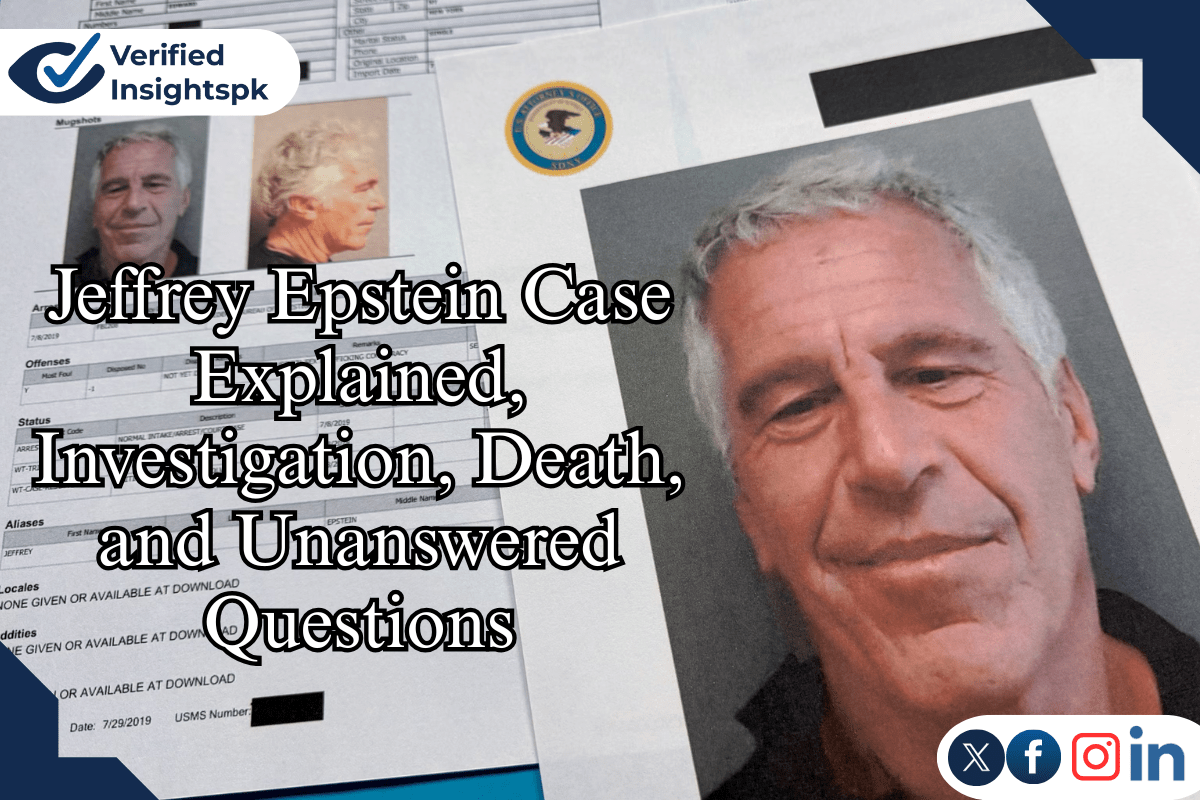
Jeffrey Epstein Case Explained |Scandal, Investigation, Death, and Unanswered Questions|
The Jeffrey Epstein case remains one of the most disturbing and controversial scandals in modern history. Years after his arrest and death, Jeffrey Epstein news continues to dominate headlines worldwide. The case exposed serious failures in the justice system, raised questions about powerful elites, and revealed how vulnerable victims were ignored for years.
This article explains what happened in the Jeffrey Epstein scandal, why it shocked the world, how the investigation unfolded, and why so many questions remain unanswered.
What Was the Jeffrey Epstein Scandal?

The Jeffrey Epstein scandal centers on serious accusations of sex trafficking, sexual abuse of minors, and exploitation. According to court records and investigations, Epstein ran a long-term operation involving underage girls, recruiting them under false promises and exploiting them across multiple locations.
This was not a single incident. It was a systematic abuse network that operated for years.
Key Elements of the Epstein Case
Sex Trafficking of Minors
One of the central issues in the Jeffrey Epstein case was the sex trafficking of minors. Epstein and his associates were accused of recruiting young girls, some under 18, through promises of money, modelling opportunities, or education. Once involved, victims were allegedly coerced into sexual acts and sometimes forced to recruit other girls.
This was not isolated; investigations revealed a systematic, organized network operating for years. Court documents show that victims came from vulnerable backgrounds, making them easy targets for manipulation. Law enforcement agencies later emphasized that Epstein’s network exploited legal loopholes and his wealth to maintain secrecy.
Why this matters:
Sex trafficking is a serious federal offence. The Epstein case highlights how wealthy and influential individuals can use their power to evade justice and exploit minors.
Abuse Across Multiple Properties
Epstein’s criminal activities were not confined to a single location. Reports show that abuse occurred at several of his properties, including:
- Little Saint James Island (U.S. Virgin Islands): Known as Epstein Island, alleged to be the primary site for abuse and recruitment.
- New York City townhouse: Used to meet victims and conduct illegal activities discreetly.
- Palm Beach, Florida, mansion: Another location where victims reported abuse.
Having multiple properties allowed Epstein to operate under the radar. Each location had a network of staff and enablers who helped facilitate abuse. The geographic spread also complicated investigations, as multiple jurisdictions were involved, making legal proceedings slower and less transparent.
Powerful Connections Shielding Him
One of the most shocking aspects of the Epstein scandal is his powerful connections. Epstein associated with politicians, celebrities, business leaders, and royalty, including:
- High-profile politicians
- Billionaires and business tycoons
- Famous entertainers
While association does not automatically imply guilt, these connections created suspicion that Epstein received protection and leniency from legal authorities. Many critics argue that his network of influence allowed him to avoid serious consequences for years, and this has fueled public outrage.
A Controversial Plea Deal
Epstein’s 2008 plea deal is widely regarded as controversial. Despite evidence of widespread sexual abuse, Epstein received a lenient sentence:
- Served only 13 months in a private arrangement
- Allowed to leave jail during the day
- Federal charges were dropped
- Victims were reportedly not informed about the deal
This plea deal is often cited as a failure of the justice system, showing how wealth and connections can influence outcomes. It allowed Epstein to continue his operations for years and created public mistrust in authorities tasked with protecting vulnerable populations.
A Mysterious Death in Jail
The most debated aspect of the Epstein case is his death in jail in August 2019, officially ruled as suicide. However, several factors raised questions:
- Epstein was taken off suicide watch
- Cameras in his cell reportedly malfunctioned
- Guards failed to follow proper protocols
These circumstances led to widespread speculation, including conspiracy theories about possible foul play. Although officially ruled a suicide, many experts and media outlets continue to question the events leading to his death. The mysterious nature of his death adds another layer to an already complex case and has intensified public scrutiny.
Jeffrey Epstein Arrest and Criminal Charges
In July 2019, Jeffrey Epstein was arrested by federal authorities on charges of sex trafficking and conspiracy. This arrest reignited global attention because Epstein had previously avoided serious punishment.
Why His Arrest Shocked the World
- Epstein had faced similar charges before
- He received a lenient plea deal years earlier
- Many believed he was protected by influence and wealth
Federal prosecutors stated that Epstein used money, threats, and manipulation to silence victims.
The Infamous Plea Deal: A Failure of Justice?
One of the most controversial aspects of the Jeffrey Epstein investigation was the 2008 plea deal. Epstein avoided federal prosecution and served only 13 months in a private jail arrangement, allowed to leave during the day.
Why This Deal Caused Outrage
Victims Were Not Informed
One of the most criticized parts of the Jeffrey Epstein case was that many victims were not informed about the plea agreement made in 2008. Under normal legal practice, victims have the right to be notified and allowed to share their views before such agreements are finalized. In this case, several victims later said they only learned about the deal after it had already been approved.
This created deep frustration and anger among survivors. Many felt that their voices were ignored and that justice was negotiated without considering their experiences. Legal experts later argued that failing to inform victims damaged trust in the justice process and highlighted serious weaknesses in how the case was handled at the time.
The issue later became part of civil lawsuits, where victims challenged the fairness of the agreement and demanded accountability from the authorities involved.
Federal Charges Were Dropped
Another major controversy was that federal charges were dropped as part of the plea deal. Epstein pleaded guilty to lesser state-level charges instead of facing more serious federal accusations related to sex trafficking. As a result, he avoided a potentially much longer prison sentence.
Critics argued that the evidence available at the time could have supported stronger federal prosecution. By dropping federal charges, the case was effectively limited in scope, and Epstein received a sentence that many considered unusually lenient for the severity of the allegations.
This decision later became a central point of public debate. Many observers questioned whether Epstein’s wealth, legal team, and social connections influenced the outcome. Years later, federal authorities reopened investigations, leading to new charges in 2019.
Epstein Continued His Activities Afterward
After serving his sentence, Epstein returned to public life and continued to maintain his business and social connections. According to later investigations and victim statements, his activities did not fully stop, and concerns about his behavior continued to surface.
Because the earlier legal action did not impose strict long-term consequences, Epstein was able to travel, meet influential people, and operate within elite social circles. This period is often discussed as a missed opportunity where stronger legal action might have prevented further harm.
The fact that allegations continued after his release strengthened criticism of the earlier plea agreement. Many commentators and legal analysts believe that the limited punishment allowed the situation to continue longer than it should have, ultimately contributing to the scale of the later scandal.
This plea deal is often cited as a major failure of the justice system and a key reason public trust collapsed.
Jeffrey Epstein Associates and Powerful Connections
A major reason the Epstein case attracted global attention was his high-profile connections.
Searches Related to Epstein Associates Include:
Jeffrey Epstein Associates
Jeffrey Epstein was known for maintaining relationships with a wide network of associates from different industries. These associates included business partners, social contacts, employees, and people connected through financial or social events. Many of these relationships became a subject of public interest after investigations into his activities began.
It is important to understand that being listed as an associate does not automatically mean involvement in criminal activity. In many cases, individuals met Epstein through business meetings, charity events, or social gatherings without knowledge of the allegations against him at the time. However, investigators and journalists examined these connections closely to understand how Epstein operated and how he maintained influence for many years.
The discussion around his associates mainly focuses on how social and professional networks can sometimes protect individuals from scrutiny, especially when wealth and influence are involved.
Jeffrey Epstein Powerful Friends
One of the reasons the Epstein case gained worldwide attention was his connection with powerful and influential people. Over the years, Epstein built relationships with individuals who held positions of authority in finance, politics, academia, and entertainment. These connections helped him gain social credibility and access to elite circles.
Critics argue that these powerful friendships may have contributed to the slow response from authorities during earlier investigations. Supporters of some individuals named in reports have stated that social contact does not imply wrongdoing. Still, the case raised serious questions about how power and influence can affect accountability.
The broader discussion is not only about specific individuals but also about how influence works in high-level social networks and why transparency is important.
Jeffrey Epstein Politicians
Several politicians were reported to have met or interacted with Epstein over the years. These connections often came through fundraising events, social functions, or shared social circles. Because Epstein moved within wealthy and influential environments, political figures sometimes appeared in photographs or flight records connected to him.
It is important to note that investigations did not conclude that all political contacts were involved in illegal activity. However, the presence of political figures in Epstein’s network increased public concern about whether political influence played a role in earlier legal decisions, especially the controversial plea deal in 2008.
The case led to wider debates about ethics, transparency, and the need for stronger safeguards when dealing with individuals who have significant financial or social power.
Jeffrey Epstein Celebrities
Epstein also interacted with celebrities from the entertainment and cultural world. These relationships were often social rather than professional. High-profile events, charity gatherings, and private parties created environments where famous personalities and wealthy individuals often met.
After Epstein’s arrest, media coverage focused heavily on these connections, sometimes creating confusion between social acquaintance and actual involvement. Many celebrities publicly denied any knowledge of his criminal behavior and distanced themselves once the allegations became widely known.
The situation demonstrated how media attention can quickly expand when public figures are involved, even when their level of connection varies significantly.
Jeffrey Epstein Billionaires
Epstein’s connections with billionaires and major business figures were central to his public image. He presented himself as a financial expert and used these relationships to strengthen his reputation. Some wealthy individuals had business discussions or investment-related contact with him, while others interacted socially.
These connections later became part of investigations and media reporting because they helped explain how Epstein maintained influence despite ongoing accusations. Observers noted that access to wealth and elite financial circles can sometimes create layers of protection that delay accountability.
The broader lesson discussed by analysts is the importance of oversight and transparency in financial and social networks, especially when individuals operate across international business and political environments.
Court documents, flight logs, and testimonies revealed that Epstein interacted with politicians, royalty, business leaders, and celebrities. While association does not equal guilt, the secrecy surrounding these connections fueled public anger.
Epstein Island and Private Properties

One of the most searched topics is Jeffrey Epstein island, officially known as Little Saint James.
Why Epstein Island Became Symbolic
Alleged Abuse Locations
Investigations and court documents reported that alleged abuse connected to Jeffrey Epstein took place at several properties he owned or controlled. These locations included residences in New York, Florida, New Mexico, and a private island in the U.S. Virgin Islands. According to victims’ testimonies and legal filings, these properties were often described as private and highly controlled environments.
Authorities and journalists later examined how these locations operated. Many reports suggested that the isolation and privacy of certain properties made it easier for activities to remain hidden from public view. It is important to note that information about these locations comes mainly from victim statements, court proceedings, and investigative reporting.
The discussion around these locations highlights how power, privacy, and limited oversight can create situations where abuse may go unnoticed for long periods.
Private Jets and Guest Lists
Private jet travel became an important part of the Epstein investigations. Flight logs and guest lists were reviewed during legal proceedings and media investigations because they showed who traveled on Epstein’s aircraft. These records attracted public attention as they included names of business figures, politicians, and celebrities.
However, experts repeatedly clarified that appearing on a flight log does not automatically imply involvement in illegal activity. Many passengers may have traveled for legitimate reasons without knowledge of any wrongdoing. Still, these records became significant because they helped investigators understand Epstein’s social network and movements.
The public focus on private jets also raised broader questions about transparency and accountability among wealthy individuals who operate across international borders.
Restricted Access
Several reports described Epstein’s properties as having controlled or restricted access. Staff members, security arrangements, and private scheduling systems reportedly limited who could enter certain areas. According to testimonies presented in court, this level of control made it difficult for outsiders to observe what was happening inside.
Restricted environments can create challenges for investigations because fewer witnesses are present, and activities may remain undocumented. Analysts later pointed out that such controlled settings can allow misconduct to continue without immediate detection, especially when individuals involved hold significant financial or social influence.
This aspect of the case became part of a larger conversation about accountability in private spaces owned by powerful individuals.
Multiple Eyewitness Accounts
The Epstein case involved multiple eyewitness accounts provided during civil lawsuits, criminal investigations, and media interviews. Several victims and former employees described similar patterns of behavior, which investigators considered important when examining the overall allegations.
Eyewitness testimony played a significant role in bringing public attention to the case, especially when earlier complaints had not resulted in major legal action. While each account was evaluated individually through legal processes, the number of similar reports contributed to increased scrutiny from authorities and the public.
The presence of multiple accounts also sparked wider discussions about how victims of abuse are heard, why reporting can be delayed, and how institutions respond when allegations involve influential individuals.
continue to trend because the island represents unchecked power and secrecy.
Jeffrey Epstein Victims and Survivors
At the heart of this case are the victims.
What We Know About Epstein Victims
- Mostly underage girls
- Recruited with promises of money
- Coerced into abuse
- Silenced through intimidation
Many survivors later filed civil lawsuits, leading to compensation programs after Epstein’s death. However, survivors continue to demand full accountability, not just settlements.
Ghislaine Maxwell and the Epstein Network
One name closely linked to Epstein is Ghislaine Maxwell.
Her Role in the Epstein Case
- Accused of recruiting minors
- Managing Epstein’s operations
- Acting as an accomplice
Maxwell’s trial confirmed that Epstein did not act alone. Her conviction brought partial justice but also highlighted how many others were never charged.
Jeffrey Epstein Death, Suicide or Something Else?
The most controversial part of the case is Jeffrey Epstein’s death in August 2019 while awaiting trial. Alot of searching at this time, Jeffrey Epstein suicide, Jeffrey Epstein jail death, Jeffrey Epstein murder theory. Here are some official explanations.
Ruled a Suicide
Authorities officially ruled Jeffrey Epstein’s death a suicide following an autopsy conducted by the New York City medical examiner. The conclusion stated that he died by hanging while in federal custody, although the ruling remained widely discussed and questioned in public and media debates. Investigations were later conducted into jail procedures and supervision failures surrounding the incident.
Found Dead in His Jail Cell
Jeffrey Epstein was found unresponsive in his cell at the Metropolitan Correctional Center in New York on August 10, 2019. He was awaiting trial on federal sex trafficking charges at the time of his death. Subsequent reports highlighted lapses in monitoring and staffing at the facility, prompting internal reviews and policy scrutiny within the federal prison system.
People want to ask, Why?
- Guards asleep
- Cameras malfunctioned
- Previous suicide watch removed
remain popular because trust in the official narrative is low.
Jeffrey Epstein Conspiracy Theories
Due to the unusual circumstances, many conspiracy theories emerged.
Common Epstein Conspiracy Searches
Jeffrey Epstein Cover-Up
Many critics and observers have claimed that powerful people helped protect Jeffrey Epstein for years. These claims mainly come from the fact that earlier investigations ended with a very light plea deal compared to the seriousness of the accusations. However, official investigations have not proven a coordinated cover-up, and authorities have stated that legal decisions were made within the system at that time.
Jeffrey Epstein Blackmail
Some reports and theories suggested that Epstein may have used his social connections and private gatherings to gain influence over powerful individuals. These claims often appear in media discussions and public speculation, but no court has confirmed that Epstein operated a proven blackmail operation. Most information on this topic remains unverified or based on allegations.
Jeffrey Epstein Intelligence Agencies
There have been public discussions and online theories claiming Epstein had links with intelligence agencies because of his international travel and high-profile contacts. However, there is no confirmed evidence from official investigations showing that he worked for or was directed by any intelligence organization. Authorities have not supported these claims.
Jeffrey Epstein Mossad Theory
A theory circulated in some media and online spaces suggesting Epstein had connections with Israel’s intelligence agency, Mossad. This idea remains speculative and has not been supported by verified evidence or official findings. Journalistic investigations have not produced confirmed proof of such involvement.
Jeffrey Epstein CIA Connection
Similar claims have appeared suggesting a connection between Epstein and the CIA. These claims are largely based on speculation due to his wealth, travel, and relationships with influential people. No official investigation or credible evidence has confirmed that Epstein had any operational relationship with the CIA.
While no verified evidence confirms these claims, experts agree that the case involved unusual levels of protection and secrecy.
Jeffrey Epstein Files, Documents, and Flight Logs
The release of Jeffrey Epstein documents reignited public interest.
What These Files Include
- Court documents
- Flight logs
- Testimonies
- Financial records
- Epstein client list
- Jeffrey Epstein unsealed files
remain highly searched because many believe key information is still hidden.
Media Coverage and Global Impact
The Epstein case changed how media, law enforcement, and the public view:
- Elite accountability
- Victim rights
- Prosecutorial transparency
It also triggered reforms in how plea deals and sex trafficking cases are handled.
Why the Epstein Case Is Still Relevant Today
The Jeffrey Epstein scandal is not just about one man. It highlights:
- Abuse of power
- Systemic failures
- Silence of institutions
- Long-term trauma for victims
This is why the case continues to appear in Jeffrey Epstein latest news searches.
Frequently Asked Questions (FAQs)
What was Jeffrey Epstein accused of?
He was accused of sex trafficking and abusing minors across multiple locations.
Did Jeffrey Epstein act alone?
No. Investigations confirmed he had assistance, including Ghislaine Maxwell.
Why is Epstein’s death controversial?
Because of jail failures, broken cameras, and unanswered questions.
What is Epstein Island?
A private island where abuse allegedly occurred.
Are there still unanswered questions?
Yes. Many believe key individuals were never investigated.
Verified Insights PK Editorial Viewpoint
At Verified Insights PK, we view the Jeffrey Epstein case as a powerful global reminder of the importance of accountability and justice. The case highlights that victims must always come first, regardless of the status or influence of those involved. Power and privilege should never be allowed to shield wrongdoing, and true justice can only exist where transparency is upheld at every stage of the legal process. The Epstein case serves as a lasting lesson for societies worldwide — that when truth is delayed, justice remains incomplete, and the responsibility to seek clarity and accountability continues.
Final Thoughts
The Jeffrey Epstein case stands as one of the most disturbing and consequential chapters in modern legal history. Despite arrests, investigations, and global attention, many serious questions remain unanswered, leaving lasting concerns about accountability, power, and institutional failure. Understanding this case is not about sensationalism or curiosity; it is about learning from a profound failure of systems meant to protect the vulnerable. Only by examining what went wrong can societies work to ensure that such injustices are never repeated, and that justice, transparency, and responsibility remain stronger than influence or privilege.