





Iran War News 2026: Trump Delays Strikes, Oil Prices Fall, But Global Markets Remain on Edge
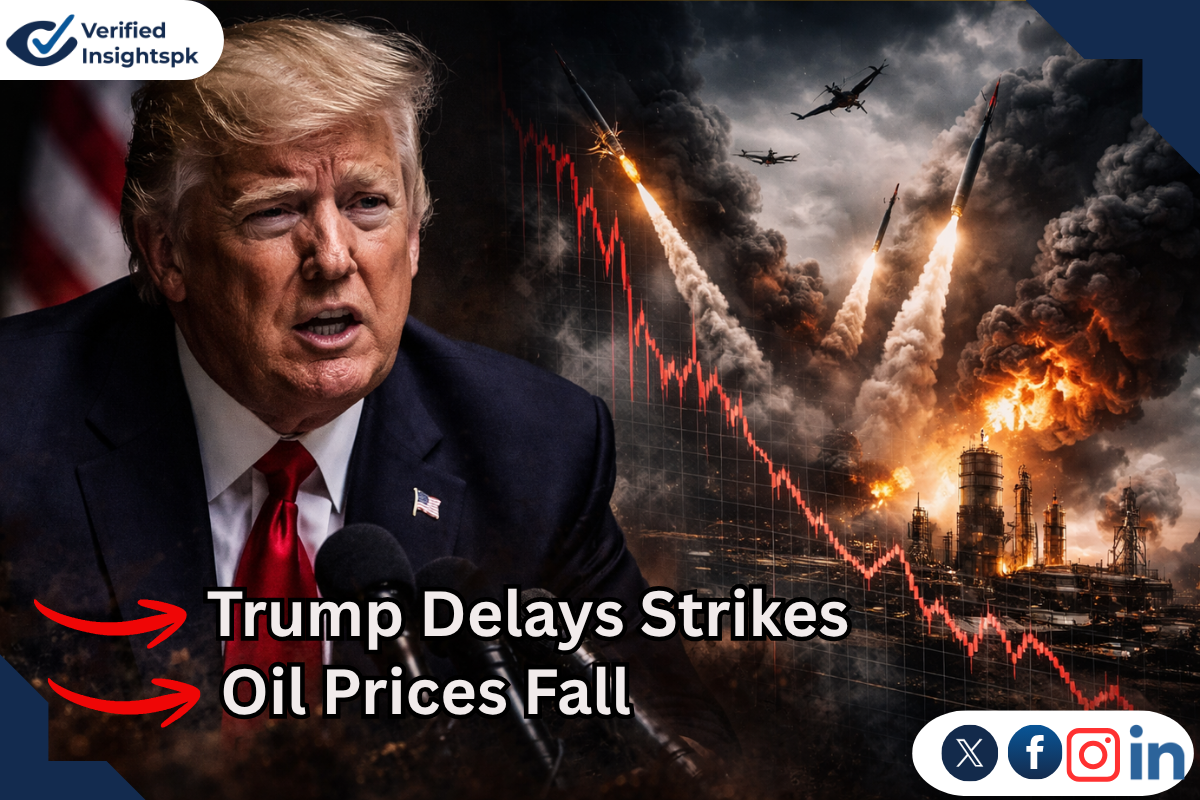
The ongoing Iran war has entered a critical phase, with global markets reacting sharply to every political and military signal. In a surprising move, Donald Trump announced a 10-day delay in planned strikes on Iran’s energy infrastructure, pushing the deadline to April 6, 2026. While this decision temporarily eased oil prices, it has failed to calm investor nerves.
The situation remains deeply volatile. Mixed messaging from Washington, firm resistance from Tehran, and continued military escalation across the Middle East have created a complex and uncertain geopolitical landscape. As a result, global oil markets, stock exchanges, and economic forecasts are all under pressure.
This article provides a complete, easy-to-understand analysis of the latest developments, the economic fallout, and what lies ahead.
Trump Delays Iran Strikes: What Happened Iran War News 2026?
A Strategic Pause or Tactical Uncertainty?
President Donald Trump initially warned that the United States would target Iran’s energy facilities if Tehran did not reopen the Strait of Hormuz within 48 hours. However, the deadline was first extended by five days and then further delayed by 10 days.
Trump stated that:
- Talks with Iran are “going very well.”
- The delay came after a request from Tehran
- The pause is meant to give diplomacy a chance
Despite this, Iranian officials have denied that meaningful negotiations are taking place, calling the situation an “exchange of messages” rather than formal talks.
This contradiction highlights a key issue: there is no clear diplomatic framework, only informal communication through intermediaries.
Also Read: Iran War 2026: Tehran Rejects US Talks as Israel Strikes Intensify and Global Crisis Deepens
Iran’s Response: No Talks Under Fire
Iran has taken a firm stance, making it clear that:
- Negotiations cannot happen during active bombardment
- Any ceasefire must include an end to US-Israeli strikes
- Iran demands war reparations and sovereignty over key waterways
Iranian military spokesperson Ebrahim Zolfaqari mocked US claims of progress, stating that Washington is essentially “talking to itself.”
This statement reflects a broader Iranian position:
Diplomacy without de-escalation is meaningless.
Also Read: Trump Says Iran Ready to Negotiate Ceasefire but “Terms Aren’t Good Enough Yet”
The Strait of Hormuz Crisis: Why This Waterway Matters
The Strait of Hormuz is one of the most critical energy routes in the world.
- Around 20% of global oil and gas passes through it
- Any disruption affects global fuel prices instantly
- It connects major oil producers to global markets
Current Situation
- Iran has restricted or blocked shipping routes
- Several vessels have been turned away
- Military threats to commercial ships continue
At the same time, Trump claims:
- Some oil tankers have been allowed through
- This signals Iran’s willingness to negotiate
However, conflicting reports have created confusion in global markets.
Also Read: Iran War Live Updates: Israel Strikes Tehran and Beirut as Gulf Tensions Explode
Oil Prices React: Drop with Caution
Short-Term Decline
Following Trump’s announcement:
- Oil prices fell by over 1%
- Markets reacted to the temporary easing of tensions
However, this decline is limited.
Long-Term Surge Still Intact
Since the war began:
- Brent crude has risen nearly 50%
- WTI crude has increased by around 40%
This shows that:
- The market sees the delay as temporary
- The underlying risk remains extremely high
Also Read: US-Israel War With Iran Escalates: Strait of Hormuz Threat, Tehran Strikes, and Global Shockwaves
Stock Markets Under Pressure
Global equity markets have not responded positively.
Key Observations
- Major Asian markets (Tokyo, Seoul) saw sharp declines
- European and US markets remain volatile
- Investors are increasingly skeptical of political signals
Market analysts describe the situation as:
“Time has been purchased, not clarity.”
This means investors do not trust that the delay will lead to peace.
Mixed Signals from Washington
One of the biggest concerns for investors is the US administration’s inconsistent messaging.
President Donald Trump has:
- Threatened massive military action
- Claimed negotiations are progressing
- Denied urgency for a deal
This inconsistency creates uncertainty because:
- Markets rely on predictable policy signals
- Sudden changes increase risk perception
Military Escalation Continues
Despite talk of diplomacy:
- Iran continues missile and drone attacks
- Israel has vowed to expand and intensify strikes
- US forces remain actively engaged
The conflict has already resulted in:
- Thousands of casualties
- Damage to infrastructure
- Regional instability across multiple countries
This shows that the war is still escalating, not de-escalating.
Global Economic Impact
Rising Inflation Risks
The war is already affecting global inflation.
- Oil price increases raise transport and production costs
- Food and energy prices are rising worldwide
- Central banks may delay interest rate cuts
Organizations like the Organisation for Economic Co-operation and Development warn that:
- US inflation could exceed 4%
- Global economic recovery may slow down.
Government Emergency Measures
Countries are taking action to protect their economies:
- Spain: $5.8 billion relief package
- Poland: Fuel price controls and tax cuts
- South Korea: $17 billion emergency budget
These measures show that the war is not just regional—it is a global economic crisis.
Also Read: Trump’s State of the Union 2026: Key Announcements, Iran Tensions, Tariffs, and Political Divisions
Humanitarian and Global Trade Concerns
The conflict is also impacting:
- Global shipping routes
- Food supply chains
- Developing economies
The World Trade Organization has warned of:
“The worst disruptions in global trade in 80 years.”
Meanwhile, developing countries face:
- Fuel shortages
- Rising poverty levels
- Increased risk of food insecurity
Is Diplomacy Still Possible?
Challenges
Diplomatic efforts face major obstacles:
- Iran demands an end to attacks first
- The US insists on stronger conditions
- No direct talks are confirmed
Mediation Efforts
Countries like:
- Pakistan
- Türkiye
- China
They are acting as intermediaries, attempting to bridge the gap.
However, without:
- A ceasefire
- Clear negotiation terms
Progress remains limited.
What Happens Next?
Possible Scenarios
1. Escalation
- US resumes strikes after April 6
- Iran intensifies retaliation
- Oil prices surge further
2. Stalemate
- Continued low-level conflict
- No major diplomatic breakthrough
- Ongoing market volatility
3. Breakthrough Deal
- Ceasefire agreement reached
- Strait of Hormuz reopens fully
- Oil prices stabilize
At present, the most likely scenario appears to be prolonged instability.
Also Read: Why “Skyfall” Is Trending During the War: The Meaning Behind the Viral Social Media Trend
Expert Analysis: Why Markets Remain Nervous
Financial experts believe that:
- The delay is not a solution, only a pause
- There is no clear roadmap for peace
- Both sides still hold strong positions
This leads to:
- Continued investor uncertainty
- High volatility in oil and stock markets
Conclusion
The Iran war in 2026 has become one of the most significant geopolitical crises in recent years. While President Donald Trump’s decision to delay strikes has provided temporary relief, it has not resolved the underlying tensions.
Oil prices may have dipped slightly, but global markets remain deeply cautious. With ongoing military actions, conflicting political signals, and fragile diplomatic efforts, the situation remains unpredictable.
The coming days—especially leading up to April 6—will be crucial in determining whether the world moves toward peace, prolonged conflict, or deeper economic crisis.
FAQ
Why did Trump delay strikes on Iran?
Trump delayed strikes to allow time for potential negotiations, although Iran denies that formal talks are happening.
Why is the Strait of Hormuz important?
It is a key global oil route through which about 20% of the world’s energy supply passes.
How has the Iran war affected oil prices?
Oil prices initially surged but slightly dropped after the strike delay, though they remain significantly higher overall.
Are the US and Iran negotiating?
There are indirect communications, but no confirmed formal negotiations.