





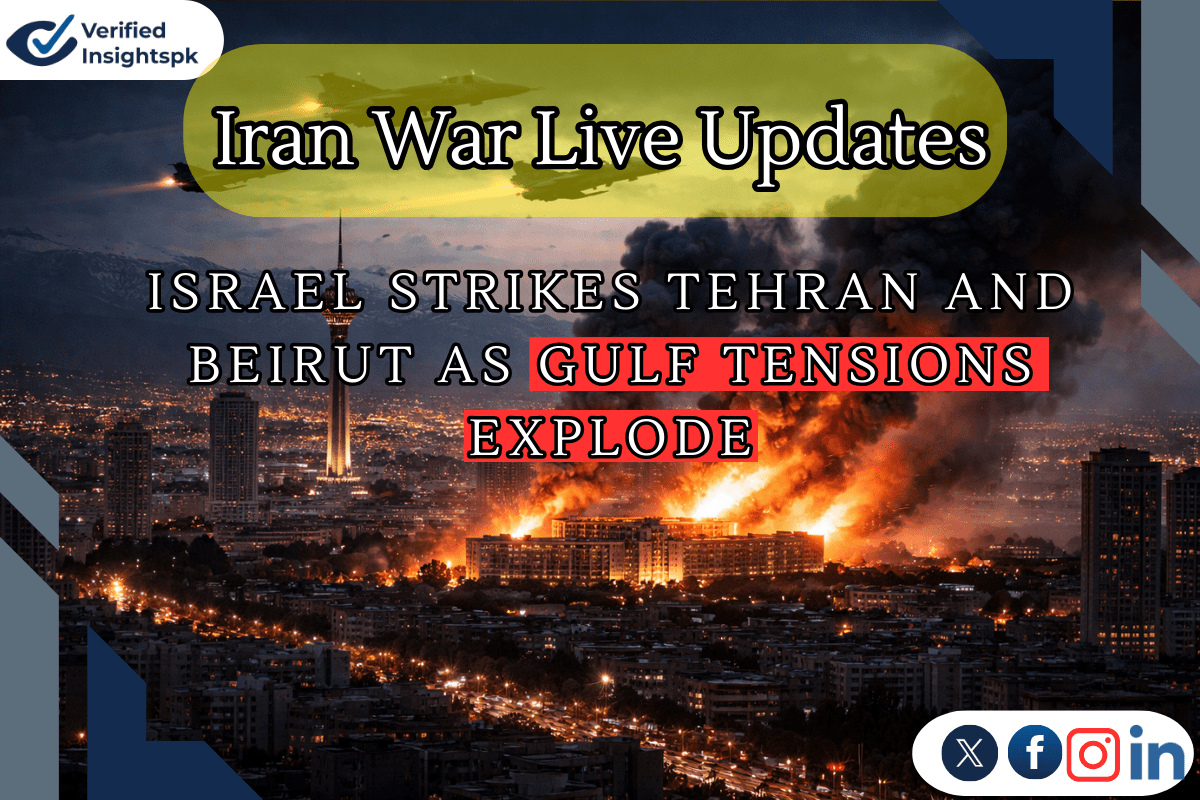
Iran War Live Updates: Israel Strikes Tehran and Beirut as Gulf Tensions Explode
The Iran-Israel war has entered a dangerous new phase.
On the fourth consecutive day of strikes, Israel expanded its assault beyond Iran’s capital, targeting both Tehran and Beirut. At the same time, drones hit the US Embassy in Riyadh. Gulf airports were disrupted. Oil routes were shaken. Nearly 30,000 people have already been displaced in Lebanon.
According to Iran’s Red Crescent, the death toll inside Iran has risen to 787, up sharply from earlier figures.
This is no longer a limited exchange. It is a widening regional crisis.
Here is a full, clear breakdown of what is happening, what it means, and what could come next.
Israel Strikes Tehran Again
Israeli forces continued airstrikes on Tehran, targeting what they described as military and strategic infrastructure. Earlier strikes reportedly hit state-linked facilities, including broadcasting centers and security installations.
Satellite imagery later confirmed damage to the entrance buildings at the International Atomic Energy Agency-monitored Natanz nuclear facility.
The IAEA stated there was damage to entrance structures at Iran’s Natanz Fuel Enrichment Plant. However, no immediate radiological consequences were reported.
This is significant because Natanz has long been central to Iran’s nuclear program.
Israel claims its goal is to:
- Destroy Iran’s long-range missile capabilities
- Cripple its naval forces
- Halt nuclear development
- Disrupt support for militant groups in the region
Iran denies pursuing nuclear weapons and says the strikes are unprovoked.
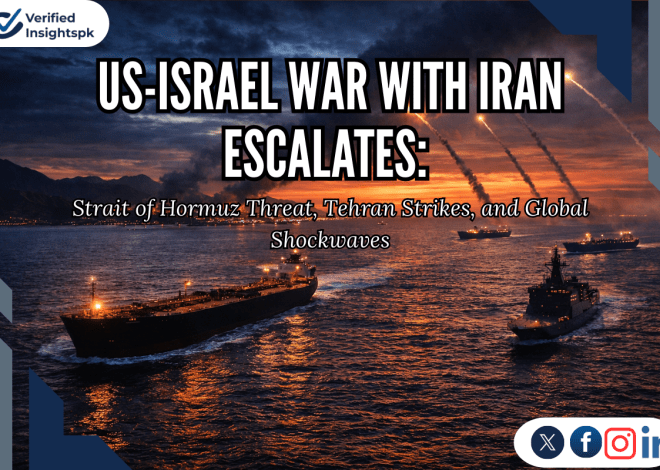
Please Also Read: US-Israel War With Iran Escalates: Strait of Hormuz Threat, Tehran Strikes, and Global Shockwaves
Death Toll Rises to 787 in Iran
Iran’s Red Crescent reported that 787 people have now been killed in US-Israeli strikes.
The number is expected to rise.
Attacks have reportedly affected over 150 cities and hundreds of sites across the country. Civilian casualties are increasing, especially in densely populated areas.
Funerals have begun in several cities, including Minab, where a reported strike on a girls’ school caused mass casualties earlier in the week.
This marks one of the deadliest escalations between Iran and Israel in modern history.
Beirut Under Fire: Lebanon Pulled Deeper Into War
Israel also intensified airstrikes in Beirut’s southern suburbs, an area known for its Hezbollah presence.
Thick smoke blanketed the skyline. Loud explosions were reported across the capital.
Israeli forces issued evacuation orders for more than two dozen towns in southern Lebanon.
Meanwhile:
- Israeli troops carried out limited incursions across parts of the Lebanon border.
- The Israeli military described the deployment as “forward defensive.”
- Israel’s defense minister authorized possible advancement into additional positions.
The United Nations refugee agency (UNHCR) says nearly 30,000 displaced people have taken shelter in Lebanon since hostilities began.
Many more remain stranded in vehicles or stuck in traffic trying to flee.
This creates a serious humanitarian concern.
Drones Hit US Embassy in Riyadh
Saudi authorities confirmed that two drones struck the US Embassy in Riyadh.
Damage was described as minor, and no casualties were reported.
The attack signals that the war is spreading beyond Iran and Lebanon. Gulf nations now face growing security risks.
The US has responded by ordering non-emergency personnel and families to leave:
- Jordan
- Bahrain
- Iraq
- Qatar
- Kuwait
howeverThe US Embassy in Kuwait has closed until further notice.
The US Embassy in Jerusalem stated it is currently unable to evacuate Americans from Israel.
Also read: Trump’s State of the Union 2026: Key Announcements, Iran Tensions, Tariffs, and Political Divisions
Oil Routes Disrupted: Strait of Hormuz Threatened
Iranian officials and affiliated groups have warned that the Strait of Hormuz could be closed.
The Strait of Hormuz is one of the world’s most critical oil chokepoints. Around 20% of the global oil trade passes through it.
Even the threat of closure has:
- Paralyzed some oil flows
- Disrupted tanker movement
- Increased global crude prices
- Triggered panic in energy markets
In Oman, drones struck fuel tanks at Duqm port. Damage was contained, but it signaled vulnerability in regional energy infrastructure.
If the Strait closes fully, global oil prices could spike dramatically.
Also read: Why Are Pakistan and Afghanistan Fighting? Inside the Escalation, Root Causes, and Future Scenarios
Air Travel Disrupted Across the Middle East
The conflict has caused major aviation disruptions.
Air France-KLM canceled flights to:
- Tel Aviv
- Beirut
- Dubai
- Riyadh
- Dammam
German tourism company TUI began emergency repatriation flights for stranded tourists.
Across tour operators, roughly 30,000 German tourists are believed to be stranded in the region.
Airports in Gulf countries also experienced missile and drone interception events.
Commercial travel in the region remains unstable.
Russia: No Evidence of Nuclear Weapons
Russian Foreign Minister Sergei Lavrov stated that Moscow has seen no evidence that Iran is developing nuclear weapons.
This statement challenges one of the main justifications presented by Washington and Tel Aviv for launching the strikes.
Iran maintains its nuclear program is peaceful.
The debate over Iran’s nuclear intentions is once again central to global diplomacy.
Trump and Netanyahu Outline War Timeline
US President Donald Trump said the war could last four to five weeks or longer.
Israeli Prime Minister Benjamin Netanyahu said the war is “not going to take years.”
These statements suggest that both leaders expect a sustained but limited campaign.
However, regional escalation could change that timeline rapidly.
Drone Strike on British Base in Cyprus
A drone reportedly struck RAF Akrotiri in Cyprus. Officials said the drone was likely Iranian-made.
France announced it would send anti-drone and anti-missile systems to Cyprus, along with a naval frigate.
This development shows NATO countries are becoming increasingly involved in defensive support roles.
Also Read: Pam Bondi Biography |Age, Husband, Net Worth, Epstein Case Hearing & Latest News|
Gaza Running Out of Fuel
Amid the wider war, Gaza is facing severe fuel shortages after border closures.
Israeli authorities announced a gradual reopening of the Kerem Shalom crossing for humanitarian aid.
However, aid remains limited.
This adds another layer to an already complex regional crisis.
Lebanon Bans Hezbollah Military Activity
Lebanon’s government has declared a ban on Hezbollah’s military activities.
The decision requires Hezbollah to hand over weapons to the state.
Whether this decision can be enforced remains unclear.
If internal conflict erupts in Lebanon, the crisis could shift into civil war dynamics.
Humanitarian Crisis Expands
The humanitarian consequences are growing rapidly:
- 787 confirmed dead in Iran
- Nearly 30,000 displaced in Lebanon
- Fuel shortages in Gaza
- Thousands stranded at airports
- Embassy evacuations underway
This conflict is affecting civilians across multiple countries.
The longer it continues, the worse the displacement and infrastructure damage will become.
Could This Become a Regional War?
The risk factors are clear:
- Direct Israel-Iran confrontation
- Hezbollah involvement from Lebanon
- Drone and missile strikes in the Gulf states
- Oil chokepoint threats
- NATO defensive deployments
If one more major actor becomes directly involved, this could transform into a full regional war.
So far, leaders appear to be balancing aggression with containment.
But tensions remain extremely high.
What Happens Next?
Three possible scenarios are emerging:
1. Short, Intense Campaign
Israel and the US complete limited objectives within weeks, followed by international pressure for a ceasefire.
2. Extended Air War
Strikes continue for months without a full ground invasion, causing prolonged instability.
3. Regional Escalation
Hezbollah expands operations. The Strait of Hormuz closes. Gulf states are pulled directly into combat.
Markets are already reacting as if escalation is possible.
Why This War Matters Globally
This conflict affects:
- Global oil supply
- Aviation routes
- Middle East security
- Nuclear non-proliferation diplomacy
- US and Russian geopolitical positioning
It is not a local conflict.
It has global economic and political consequences.
Conclusion
The Iran war is no longer contained.
Israel is striking Tehran and Beirut. Iran’s death toll stands at 787. Nearly 30,000 are displaced in Lebanon. Drones have hit US diplomatic sites. Oil routes are under threat.
World leaders say the war will not last for years. But weeks of continued escalation could reshape the Middle East.
The coming days will determine whether this becomes a limited military campaign — or a wider regional conflict.
FAQ
What is happening between Israel and Iran?
Israel has launched airstrikes on Iran, targeting military and nuclear-related sites. Iran has responded with missile and drone operations. The conflict is expanding regionally.
How many people have died in Iran?
According to Iran’s Red Crescent, at least 787 people have been killed so far.
Has the Natanz nuclear site been damaged?
Yes. The International Atomic Energy Agency confirmed damage to the entrance buildings at the Natanz Fuel Enrichment Plant.
Why was the US embassy in Riyadh hit?
Saudi authorities reported that drones struck the embassy compound, causing minor damage. No injuries were reported.
Is the Strait of Hormuz closed?
Iranian officials have warned of closure, but full closure has not been officially confirmed. Oil flows have been disrupted.