





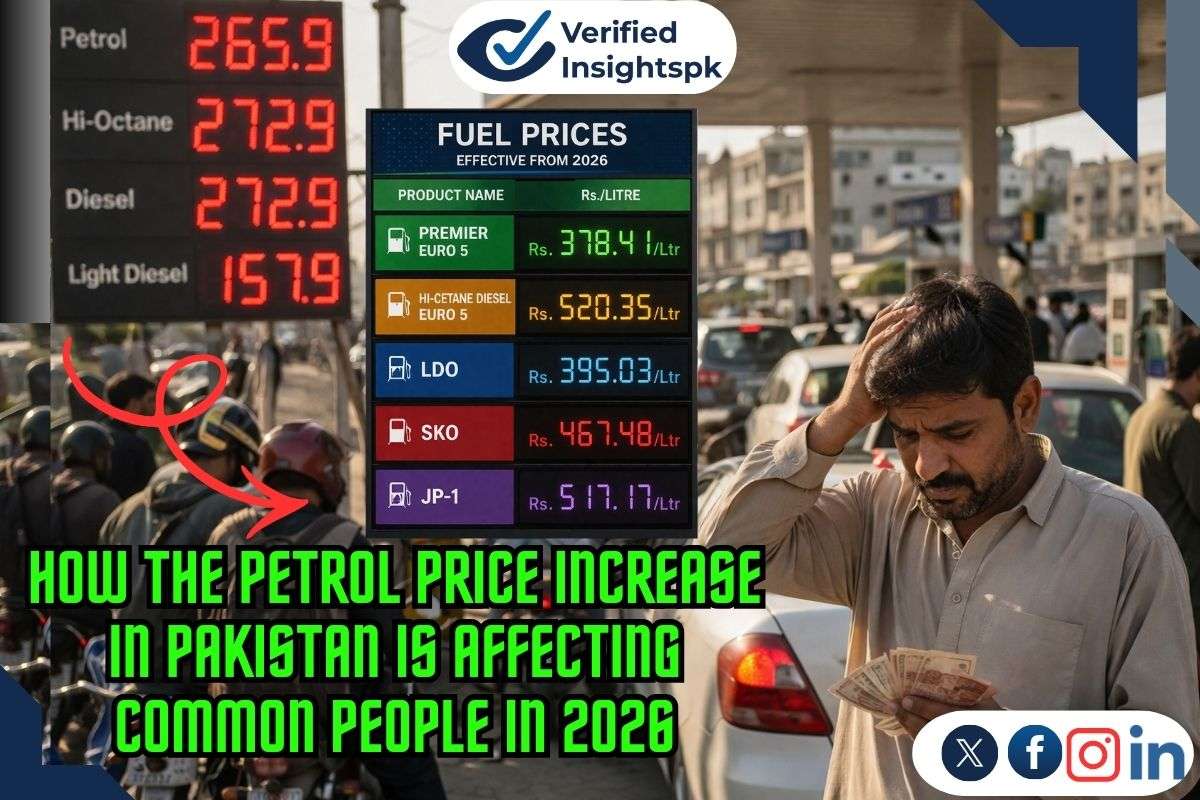
How the Petrol Price Increase in Pakistan Is Affecting Common People in 2026
In the year 2026, the petrol price hike is a major concern in Pakistan. Petrol price increase in Pakistan effect peoples daily life and household budgets. Whether it is a person who drives to their work, a delivery person, or anyone who uses transport for any purpose, is now affected. In Pakistan, most of the people depend on the roaster road transport or public transport. People in Pakistan are still learning how to cope with rising fuel prices.
In this article, we will discuss the impact of petrol price increases on the daily life of people, and how the Minister’s expenses and the rise in fuel prices affect workers in business dealings. We will also discuss the alternative people are using, government actions to control fuel prices, and public reaction to the fuel price hike. In this article, we will also share tips to help divisions handle the petrol price hike more effectively.
Reasons Behind The Petrol Prices Increase in Pakistan
There are a lot of global and local factors that contribute to petrol price hikes.
Unstable Global Oil Market
Pakistan is a developing country that heavily relies on imported crude oil. When the oil prices rise internationally due to restrictions, political tension, or something else, Pakistan’s fuel imports will also increase. For example, when crude oil prices cross certain limits internationally, the cost is passed on to the consumer at the pump.
How Currency Value Affects Petrol Prices
The value of Pakistani rupees is very low compared to the US dollar, which directly impacts the petrol prices. As the oil is imported in Dollars and if the Pakistani rupee is weaker, Pakistan has to pay more money in rupees to buy the same amount of petrol. This thing leads to higher fuel prices in Pakistan.
Fuel Texas
Federal and provincial taxes, such as petroleum development levy, sales tax, and excise duties, all these types of taxes made up a large part of the petrol prices. When the government changes the tax on petrol, it directly increases or decreases the price of petrol that people pay.
Cost Of Refining And Delivering
In Pakistan, there is limited refining capacity, so Pakistan imports already refined fuel. Other costs like transportation, shipping, and storage also increase the final price of petrol. When all these factors combine, it can frequently increase the petrol prices that Pakistani people see on mobile apps and fuel stations.
Impact of Fuel Prices on Everyday Living
This increase in petrol prices impacts daily life in Pakistan, and it also affects different segments of society differently.
Daily Workers
Millions of Pakistanis travel daily between home and work, especially in metropolitan areas like Karachi, Lahore, Islamabad,d Rawalpindi, Peshawar, and Quetta. Many people use bus services, motorbikes,s or rickshaws that are essential for them. When petrol prices rise, the daily transportation costs increase,s due to which people face a tight household budget.
Petrol Prices Impact On Business Owners
Petrol is not just a thing that is used for travel; it is also a major business expense. In many ways, trucks, rickshaws, and company vehicles use fuels to transport goods and services. When the petrol prices rise, it automatically makes the price of goods and services go up. This thing has become a problem for every person to buy common goods and services for themselves.
Impact Of Petrol Price On Household Budget
As the petrol prices on page one of the biggest Pakistani families affect their budget. The petrol price hike makes food, groceries, and other essential things more expensive. Many families have to adjust their monthly spending for education, reducing their money for the year and saving money for higher fuel costs.
Petrol Prices Contribute To Inflation
As a developing country, Pakistan already faces high inflation, and an increase in petrol prices makes it even worse. High fuel prices increase expenses in transporting food and construction. This shows that the price hike of petrol affects the overall economy of the country.
Also Read: Why Are Pakistan and Afghanistan Fighting? Inside the Escalation, Root Causes, and Future Scenarios
Public reaction to the hike in petrol prices
In Pakistan, people react differently to rising petrol prices.
Social Media Response
When the petrol prices increase, different social media platforms like Twitter, Facebook,k Instagram, and WhatsApp groups are filled with people’s reactions. People share complaints, human memes,s and criticism on the government about fuel taxes and government policies.
Political Protest
In different cities and provinces, the transport unions and political groups protested against the fuel price rises. Protests include blocking roads,n organising sit-ins, changing policy makers, and reducing taxes on petrol.
Everyday Conversations
People often talk about petrol prices at the workplace, at home, and at tea stalls. They discuss different strategies for saving money for shared transport and ways to budget their homes.
This reaction shows that the rise in petrol has emotionally and finally damaged people;e it is not just affecting the wallets but the people’s mental comforts and their financial security.
Also Read: Gold Price in Pakistan Hits Rs541,262 per Tola as Global Rates Surge (Feb 27, 2026)
Ways to Cope with Rising Fuel Prices
Pakistani people are exploring new ways to cope with the rising fuel prices through practical measures. Here are some of the strategies people are using nowadays.
Reduced Driving
Many people in Pakistan choose to use a private vehicle. Instead of using a private vehicle for the market and workplace, people combine their multiple tasks into a single trip or choose public transport.
Carpooling
Nowadays in Pakistan, carpooling has become very popular among students and coworkers. Carpooling is an effective technique during a petrol price rise.
It includes:
- It helps in shading petrol expenses.
- It decreases the number of vehicles on the road.
- It produces a strong sense of community and cooperation.
- It also reduces the damage and maintenance cost of the vehicle.
In rural areas, people know that carpooling is easy. But in urban areas, people use groups like social media WhatsApp groups or workplace noticeboards to use this technique.
Usage of public transport
People use buses, wagons, and shared auto rickshaws because they are more affordable transport for them. However, sometimes public transport services become so crowded or inefficient, but it is more effective in terms of fuel cost.
Two-wheeler preference
As compared to cars, motorbikes consume less petrol. Many families use bikes for things where it is possible, like in the market in crowded areas. People prefer bikes for short commutes because they reduce fuel spending.
Choose fuel-efficient vehicles.
People in Pakistan are now purchasing vehicles that consider fuel efficiency. People are using electric cars or electric bikes to cope with the petrol price. This shift reflects how people practically adopt different things to cope with the situations.
Also Read: BREAKING NEWS: Historic Gold & Silver Price Crash: What Just Happened and What You Should Do Now
Practical Budgeting Tips
To manage your finances effectively in this area of petrol rate hikes. Here are some useful budgeting tips for rising petrol costs specific to Pakistan.
Record your monthly spending.
Keep a record of how much is spent on petrol every month. This simple track will help you to be prepared in advance for the hike in petrol prices in the future.
Adjust budget
When the petrol prices increase, reduce non-essential expenses such as dining out, subscriptions, or travelling in order to adjust your household budget. This will help you to save money for petrol expenses.
Use of fuel budget
Decide on a fixed amount of petrol budget and travel according to that. Do not exceed the limit of your budget. This discipline helps you to avoid overspending on petrol.
Plan your trip effectively to save fuel.
In order to save fuel, always plan multiple trips into one. For example,e grocery shopping and other things that are needed at once, so that you can reduce your fuel usage.
Monitor petrol prices online.
Pakistan’s Ministry of Energy regularly updates the petrol prices. Always stay connected with them and adjust your budget accordingly.
Also Read: Gold Rate Today in Pakistan: Live Updates, Trends & Buying Guide
Transportation alternatives
As the petrol prices increase, people in Pakistan are exploring new alternative ways to drive.
Using bicycle
People in Pakistan are now preferring to use a bicycle for shorter trips, especially for nearby markets or schools.
Walking
People prefer to walk for short distances.
Ride sharing
In the largest cities like Rawalpindi, Islamabad, Karachi, and Lahore, services like Cabs and Uber have an option for ride sharing. This will help in cost savings.
Work from home
Even in Pakistan,n some businesses in offices allow workers to work fr homeom. This helps people to reduce their daily fuel expenses.
Online shopping
Instead of driving to the store, some families preferred to shop online for groceries and essential items to reduce petrol use.
Long-term ways to handle the petrol price hike
Switch to electric vehicles
One of the most discussed alternatives for fuel price is to switch to electric vehicles during the petrol hike.
- As electric cars and bikes do not consume petrol, these are good alternatives for long-term use.
- But there are some of the barriers to adopting these practical tips, such as:
- Pakistan has a limited electric vehicle infrastructure
- In Pakistan, electric vehicles have a very high cause that it not affordable for everyone.
- Pakistan doesn’t have a stable electricity supply, so it is very difficult to recharge them.
- Pakistan doesn’t have enough electric vehicle charging stations.
However, there are a lot of challenges to adopting these alternatives, but people are using them with the help of government incentives for private investments.
Enhancing public transport infrastructure
By expanding public transport or making public transport more efficient and affordable, like Metro buses,s local trains are very important for the long-term use of people during the petrol price hike.
These services can help people to rely less on private cars and make future petrol price hikes easier to handle.
Fuel-saving card technologies
Cars with hybrid engines continue to attract buyers who want to balance fuel dependence and cost.
Steps the government can take to reduce fuel costs.
While individuals can adopt different strategies to cope with the rise of fuel prices. Many Pakistanis are looking for the policymaker to provide some relief. Some of the common government measures to control fuel prices include:
Tax adjustment
The government can reduce the petroleum tax temporarily during the period of high fuel prices to give relief to the people.
Subsidies
Fuel subsidies, which are costly for the government but have often been used to keep petrol prices stable when there is a sudden increase in price.
Emergency fuel stock
In order to stabilize the fuel prices, the government can store fuel so that if the international prices increase, it does not affect the country as much.
Promote alternative energy
The government can promote electric vehicles, renewable energy solutions,s compressed natural gas,s and alternative things to reduce petrol dependency.
Coordinate with global partners
Engaging in global energy discussions and trade agreements can help Pakistan to secure a crude oil price.
Conclusion
The petrol price hike in 2026 has affected people in Pakistan. Their daily routines have been disturbed. Daily commuters, business owners, and families are all impacted in their budgets, travel habits, and everyday routines. Coping with these situations is not just about reacting; it is a way of adopting planning and finding new ways to manage your life.
People are using different strategies, such as saving fuel by using public transport. The government can also help people by improving policies and investing in transport infrastructure.
In the end, handling petrol prices takes effort from everyone in the citizen community, businesses, and policymakers. Making policies today will help Pakistan to manage the transportation economy and daily life more effectively in the future.