





Samsung Solves the Foldable Crease with Galaxy Z Fold 8, While Apple Takes a Different Path
Samsung Solves the Foldable Crease with Galaxy Z Fold 8, While Apple Takes a Different Path
The global smartphone industry is entering a decisive phase in 2026, and foldable phones are at the center of this transformation. While earlier generations of foldable devices impressed users with innovation, one issue remained unresolved for years, the visible screen crease. Now, Samsung has officially taken the lead by introducing a crease-free foldable display, setting a new benchmark with the upcoming Galaxy Z Fold 8.
At the same time, Apple is preparing its own foldable iPhone, but reports suggest that Apple’s solution to the crease problem may be structurally different from Samsung’s approach. This has triggered intense discussion among industry experts, analysts, and consumers alike.
This article explores Samsung’s creaseless foldable OLED technology, Apple’s alternative display strategy, and why foldable display engineering is becoming the most competitive battleground in smartphone innovation.
Foldable Phones in 2026 (Why the Crease Matters More Than Ever)
Foldable smartphones have evolved rapidly, but the foldable phone crease has remained the biggest concern for users. Despite improvements in materials and hinge mechanisms, visible creases affected:
- Display aesthetics
- Long-term durability
- Touch consistency
- Premium user experience
As foldable phones become mainstream in 2026, consumers now expect crease-free foldable displays as a standard, not a luxury.
Samsung Display’s breakthrough at CES 2026 signals a turning point—not just for Samsung, but for the entire foldable smartphone industry.
Samsung Display’s CES 2026 Breakthrough (A Crease-Free OLED Panel)
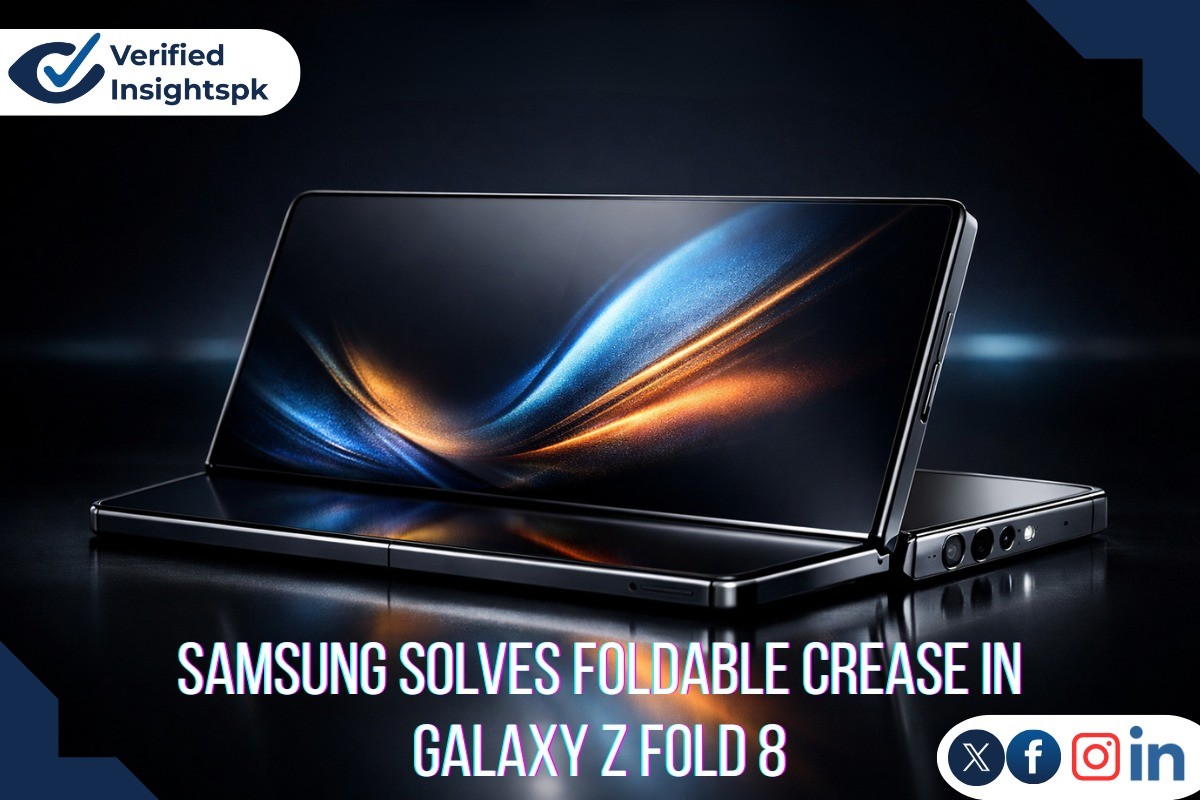
At CES 2026, Samsung Display showcased its first crease-less OLED foldable panel, marking a historic milestone in display technology. According to confirmed industry reports, this exact panel will power the Samsung Galaxy Z Fold 8, making it the first Galaxy foldable without a visible crease.
Key Highlights of Samsung’s Creaseless Display
- Zero visible crease under normal viewing angles
- Improved rigidity and durability
- Enhanced folding resilience over time
- Designed for mass production, not just prototypes
This innovation places Samsung years ahead in foldable phone display technology and positions the Galaxy Z Fold 8 as the most advanced foldable smartphone of 2026.
Galaxy Z Fold 8 Display Technology (What Makes It Crease-Free?)
Samsung’s success lies in reengineering the structural support layer beneath the OLED panel.
Traditional Foldable Display Structure
Most foldable OLED panels consist of:
- Polyimide substrate
- Plastic (PET) support layer
- OLED emissive layer
- Touch sensor
- Ultra-thin glass (UTG)
The problem? Plastic support layers deform over time, causing permanent creases.
Samsung’s Metal Reinforcing Plate
For the Galaxy Z Fold 8, Samsung replaced the traditional PET support layer with a thin metal reinforcing plate.
Why Metal Reinforcement Matters
- Metal resists permanent deformation
- The display returns to its original flat shape after folding
- Reduced stress concentration at the fold point
- Dramatically improves foldable smartphone durability
This innovation allows the Galaxy Z Fold 8 to maintain a smooth, crease-free display, even after thousands of folds.
Improved Optical Clear Adhesive (OCA)
Samsung Display also refined the optical clear adhesive (OCA) layer between the OLED components.
- Benefits of the New OCA Formula
- Softer, more flexible composition
- Better shock absorption during folding
- Prevents wrinkle formation
- Enhances long-term display uniformity
This adjustment plays a crucial role in eliminating micro-wrinkles that eventually become visible creases.
Galaxy Z Fold 8 vs Galaxy Z Fold 5
When compared to earlier models like the Galaxy Z Fold 5, the Fold 8 shows a dramatic improvement.
Key Differences
- Fold 5 uses plastic support layers
- Fold 8 uses metal reinforcement
- Fold 5 shows crease under angled light
- Fold 8 appears uniform even from side angles
This positions the Galaxy Z Fold 8 as the best foldable phone display in 2026.
Apple Foldable iPhone (Same OLED, Different Structural Support)
Earlier rumors suggested Apple would use Samsung’s crease-free panel. However, newer reports confirm that Apple is taking a different engineering approach.
While the OLED layer itself may be identical, Apple is reinforcing it using glass instead of metal.
Apple’s Glass-Supported Foldable Display Explained
Apple is reportedly using glass as the structural support material beneath the OLED panel.
Advantages of Glass Support
- Even pressure distribution across the display
- Potentially smoother folding motion
- Excellent optical clarity
Challenges with Glass
- Requires extremely precise engineering
- More complex manufacturing
- Higher production costs
Apple’s approach reflects its focus on precision engineering and premium design, but it may delay mass production compared to Samsung.
Why Structural Support Is the Real Foldable Innovation
Many consumers focus on hinge design, but experts agree that structural support layers determine:
- Crease formation
- Long-term durability
- Display flatness
- Touch consistency
Samsung’s metal-based solution prioritizes practical durability, while Apple’s glass-based approach emphasizes optical precision.
Foldable Phones in 2026 (The Fiercest Competition Yet)
With both Samsung and Apple launching foldables in 2026, competition will be more intense than ever.
Expected Launch Timeline
- Galaxy Z Fold 8: July 2026
- Apple Foldable iPhone: September 2026
Samsung is likely to capture early market momentum, especially among users who prioritize crease-free foldable phones.
What This Means for Consumers
For users considering foldable smartphones in 2026, these innovations bring major benefits:
- Better display longevity
- Premium viewing experience
- Improved resale value
- Reduced wear and tear
The crease-free OLED foldable phone is no longer a concept—it is becoming reality.
Future of Foldable Displays: What Comes Next?
The success of Samsung Display’s creaseless OLED panel will likely influence:
- Other Android manufacturers
- Tablet-style foldables
- Rollable display technology
- Laptop and wearable foldables
This marks the beginning of a new era in foldable display innovation.
Final Thoughts
Samsung has clearly taken the lead by solving one of the biggest problems in foldable phone history. The Galaxy Z Fold 8 represents a major leap forward in foldable smartphone display technology.
Apple’s glass-supported foldable iPhone may still surprise the market, but Samsung’s early execution gives it a decisive advantage in 2026.
As competition intensifies, one thing is clear, the future of smartphones is foldable, and the real battle is happening beneath the display.
Stay Updated with Verified Insights. We hope you found this detailed guide informative and insightful. Keep reading VerifiedInsightsPK.com for the latest updates on smartphones, foldable technology, and future innovations shaping the tech world.



When will it launch in Pakistan?